

Elevating Precision in Metal Joining: The Power of Arc Welding Robots
Arc welding, a pivotal technique in the manufacturing industry, has been transformed by the advent of robotic automation. T.I.E. Industrial is leading this transformation, offering a comprehensive suite of both innovative and expertly refurbished arc welding robots. With an array of options from top manufacturers like Fanuc, Motoman, ABB, and KUKA, we enable businesses of all sizes to harness the benefits of arc welding automation, significantly improving weld quality, operational efficiency, and worker safety.
The Arc Welding Revolution
Arc welding robots utilize an electric arc formed between an electrode and the metal workpiece to melt and fuse materials together. This process can involve either consumable or non-consumable electrodes, catering to a wide range of welding requirements. The precision and control afforded by robotic arc welding result in stronger, more consistent welds and open up new possibilities for innovation in metal fabrication.
Key Advantages of Robotic Arc Welding
- Consistency and Quality: Robotic welders deliver uniform welds with impeccable repeatability, enhancing the structural integrity and appearance of the final product.
- Increased Safety: By automating arc welding, robots minimize human exposure to hazardous welding fumes and the risk of arc-related injuries.
- Operational Efficiency: With the ability to operate continuously, robotic welding systems significantly reduce cycle times, boosting productivity.
- Cost Savings: The efficiency and precision of robotic welding translate into lower production costs and a compelling return on investment.
Leading Models for Arc Welding Applications
T.I.E. Industrial offers a selection of robots specifically designed for arc welding applications, featuring:
- Fanuc Arc Mate 100iC: Renowned for its versatility and precision, this model is ideally suited for a wide range of arc welding tasks, from simple to complex assemblies.
- Motoman AR2010: With a high path accuracy and wide work envelope, the AR2010 is perfect for achieving high-quality welds in large components.
- ABB IRB 6700: Known for its durability and reliability, this robot is designed for demanding welding environments, offering exceptional performance and longevity.
- KUKA KR CYBERTECH: Specialized for welding applications, the KR CYBERTECH series excels in both heavy and light-duty tasks, ensuring optimal weld quality and efficiency.
Industry Applications
Robotic arc welding systems are revolutionizing manufacturing processes across various industries:
- Automotive: For welding chassis, frames, and other critical components, ensuring vehicle safety and durability.
- Aerospace: In fabricating aircraft parts where precision and strength are non-negotiable, robotic arc welding offers unmatched accuracy.
- Heavy Machinery: Constructing equipment for construction, agriculture, and mining, where robust welds are essential for operational reliability.
- Shipbuilding: Assembling large-scale structures such as hulls and decks, where the efficiency and consistency of robotic welding can significantly expedite production timelines.
Tailored Solutions for Every Welding Challenge
Understanding that each welding project has unique requirements, T.I.E. Industrial provides customized solutions that range from selecting the ideal robot model and technology to integrating specific safety features. Our team of experts supports clients through every step of the process, ensuring that each robotic welding system is perfectly aligned with their operational needs and goals.
Commitment to Excellence
With a focus on delivering both top-quality products and customer support, T.I.E. Industrial is dedicated to empowering clients with the tools they need to succeed in the competitive manufacturing landscape. Whether you're integrating a new robotic welding system or optimizing an existing setup with a refurbished model, our commitment to excellence ensures that your investment enhances productivity, quality, and safety across your operations.
Discover the transformative potential of robotic arc welding with T.I.E. Industrial. Explore our range of robotic solutions designed to meet the diverse challenges of modern manufacturing.
Featured Articles
You might be also interested in:
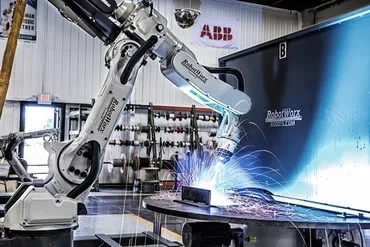
- Robotics Applications
What are the advantages of robotic welding versus manual welding?
Automating your welding system will bring a wide range of benefits including faster and more consistent cycle times, no break in production, and an overall better weld quality. A robotic welding system can quickly move from one weld to the next helping to improve the entire speed and quality of the welding process. If you are interested in integrating a robot on a welding production line and improving the process, contact Robots.com representatives today.
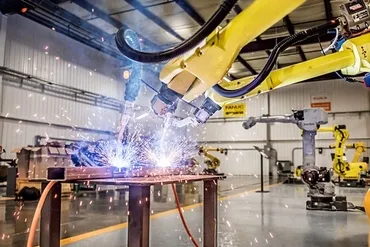
- Robotics Applications
Buying a Robotic Welding System: A Comprehensive Guide
Automating your welding process is pretty easy due to recent innovations in technology. Robotic welding systems are simple to program and provide you with increased speeds and accuracy. Understanding your application process better will help you choose the perfect robotic welding system.
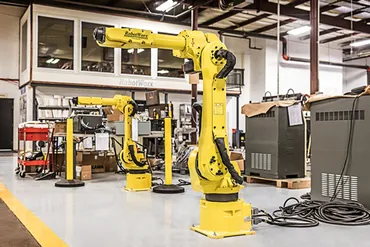
- Robotics Applications
Arc Welding Robots Offer Reliable ROI
Arc welding robots bring increased speeds, reliability, savings, and safety to manufacturing lines across the globe. Furthermore, arc welding robots bring a very fast Return on Investment as these automation systems reduce downtime, product waste, and increase the overall throughput. Robots.com experts have over 35 years of integration experience and look forward to working towards the integration process of your arc welding system.
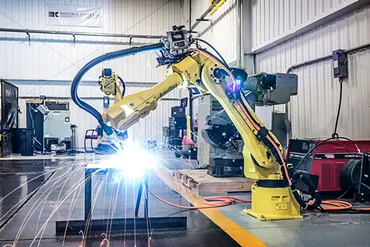
- Robotics Applications
Arc Welding Robots at Reduced Prices
Robots.com takes pride in their customer service and their new and used product availability to customers across the globe, including the selection of arc welding systems. Experts at Robots.com strive to provide affordable solutions to customers, bringing a fast ROI. A reconditioned arc welding robot will provide consistent and fast cycle times with few product errors, creating a superior quality product.
- Maintenance & Service
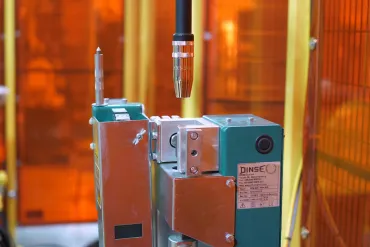
Welding Torch Cleaning Station
It is important to keep your welding nozzles clean in order to maximize productivity. Welding torch cleaning stations, also known as reamers, help to increase the overall efficiency by helping to minimize spatter and debris. Proper maintenance and upkeep is important to keep the automated welding prcess streamlined. Contact Robots.com experts today to learn more about welding torch cleaning stations.
- Robotics Applications
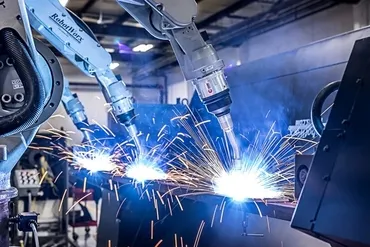
Arc Welding Robots 101
Robotic arc welding is becoming increasingly more popular as technology continues to advance and automation systems become more affordable. Automated arc welding is able to accurately and consistently produce quality welds, providing for a happy and satisfied manufacturer and customer.