Ready for robots? As you consider taking the plunge into robotic automation, keep the following five points in mind.
1) It's Important to Assess Your Needs and Goals
The more you know about your application and product, the easier it will be to transition to robots and communicate your vision to your integrator and your staff. Carefully evaluate the ins and outs of the process you want to automate. Make sure to consider your current needs and your future needs. Additional flexibility can be built into the system if these things are considered in advance.
Outline the automation goals and gather factual support to back them up. What challenges will the robot need to overcome? What are the throughput, cycle time, and quality requirements? What sorts of hazards and/or ergonomic issues have workers been facing? This kind of pre-thinking will make for faster, more efficient communication and a better final product.
2) An Integrated Robot System Always Trumps An Arm
Surprisingly enough, choosing to purchase a fully integrated workcell rather than a solitary robotic arm can save time, minimize costs, and preserve your sanity.
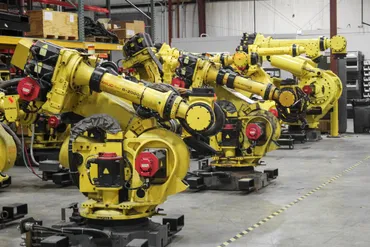
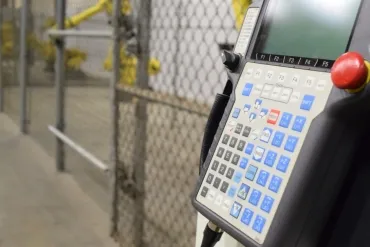
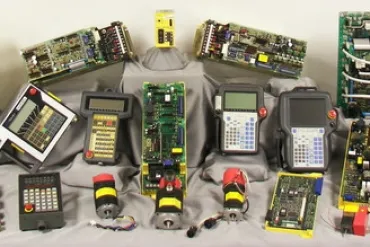
While cheaper, a robot arm is just the bare bones: manipulator, teach pendant, and controller. All the rest is up to you to integrate, configure, and finish. On the other hand, a workcell includes every necessary component -- safety environment, tooling, positioner, operator station -- all working in harmony.
Avoid unexpected delays and multiple headaches by working with an integrator to build a custom robot system to match your needs.
3) Robots Are Not Replacements
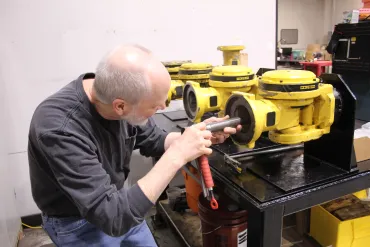
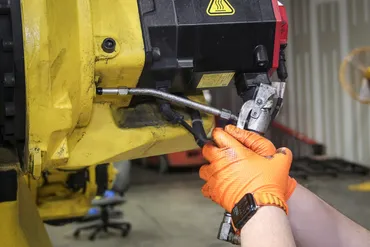
Robots are machines. While they are able to work 24/7, in the dark, without stopping, don't forget that robotic systems still need to be maintained, programmed, and monitored. Parts still need to be fixtured, loaded, or unloaded, etc. There are still many jobs to be done -- by workers, engineers, operators, and robot technicians.
It's important for companies and workers to understand that robots can offer opportunities for jobs to shift and coexist. Introducing robots into a workplace can cause a lot of upheaval because workers feel threatened. Companies need to clearly communicate with workers the reasons for automating. The more people know about the goals and economic forces leading the company to buy robots, the more comfortable they will be with the change. In addition, it's vital for leaders/managers to be involved in the process of designing and planning the robot system.
4) Creative Savings Options Exist
A robotic system is a sizeable investment. However, there are some easy ways to shave hundreds to thousands of dollars off the final cost. Consider saving money with pre-owned and hybrid system options.
Fully reconditioned, pre-owned robots offer excellent performance and reliability - for less than half the cost. RobotWorx' selection of pre-owned robots includes Motoman, FANUC, KUKA and many other robot models.
Mix and match your way to savings with a hybrid workcell option. These affordable systems have both brand new and pre-owned components. Pair a new robotic arm with a pre-owned positioner, or a pre-owned robotic arm with cutting-edge tooling - the options are endless!
5) Robot Training is Extremely Valuable
Get the most out of your automation experience by testing out your new equipment and learning how to program your robot with help from trained professionals. Again, it's important to involve key managers/engineers at this stage so they can become more comfortable with the technology and less threatened by their new tasks (programming, maintenance, monitoring). Training will allow for faster robot installation and implementation.
Many robot manufacturers and integrators offer training courses and classes. RobotWorx includes training with every robot system purchase.
Interested in learning more? Contact RobotWorx at 740-251-4312.