
What Are Four Axis Robots?
Overview and Configuration
Four axis robots are configured differently than the more common six axis robot models. The key distinction is that four axis robots have only one axis in the wrist area instead of three. This simplified design provides maximum stability and strength, making these robots ideal for applications such as material handling and palletizing.
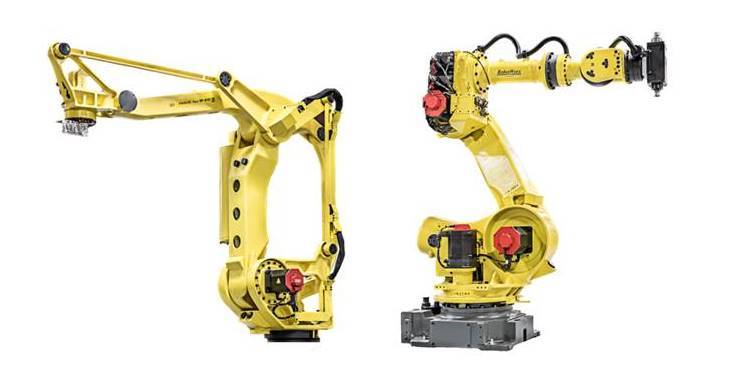
Some four axis robot models feature reinforcement bars along the upper and lower arms, enhancing their sturdiness for industrial applications.
Axis Configuration Breakdown
Four axis robots operate with the following joint structure:
- Axis J1: The base axis that allows the robot to pivot from left to right
- Axis J2: Attached to the base configuration, enabling forward and backward movement
- Axis J3: The critical joint connecting the upper and lower arms
- Axis J4: The wrist axis that rotates the EOAT (End-of-Arm Tooling) - equivalent to axis six on standard 6-axis robots
Applications and Advantages
The four-axis design is particularly valuable for palletizing applications where the robot's stability and strength are essential for handling loads efficiently.
Getting More Information
Interested in a four axis robot? Contact Robots.com at 877-762-6881 for pricing and availability.