
What Are Servo Amplifiers? Control, Feedback & Power Dynamics
Using servo amplifiers helps to improve the robot's overall functionality. Servo amps help to improve a robots speed, accuracy, and overall product quality. These amplifiers are able to pass on feedback to the motor and the command control. Robots.com offers a wide range of new and refurbished robots and parts, so contact experts today to get started automating!

Servo amplifiers, or servo amps for short, are drives that are used to power electronic servomechanisms, such as servo motors. A servo amp transfers signals from the command module of the robot, and translates them for the servo motor, so the motor knows how much it should move at any given time. By using servo amplifiers, servo motors are able to perform more consistently, meaning that the path trajectory and overall motion of the robot is more smooth and consistent during its application cycles.
There are several advantages to using servo amplifiers and their subsequent motors for a robotics system, as opposed to using traditional AC or DC motors. The main advantage is the feedback that these amplifiers are able to pass on to the motor and the command control. Because there is feedback, operators are able to watch for possible motion issues and any unwanted motion.
With these types of servomechanisms in use, a robot’s overall functionality is greatly improved. By improving the overall motion of the robot, a servo amplifier is also contributing to the operation of the robot as a whole. The speed and the accuracy improves, and that enhancement also translates to the quality of the product the robot is helping to produce.
Are you interested in learning more about servo amps, motors or other servomechanisms that are available for industrial robots? If so, then you should call Robots.com. Our staff is ready to help you build and customize every aspect of your robotic system to improve the functionality of your application, as well as your overall productivity.
For more information, contact Robots.com today at 877-762-6881.
Related Articles
You might be also interested in:
- Technical Components
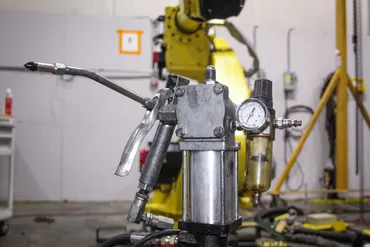
Understanding Grease Compatibility in Multi-Robot Facilities: Why Standardizing Robot Grease is Critical for Maintenance Professionals
- Technical Components
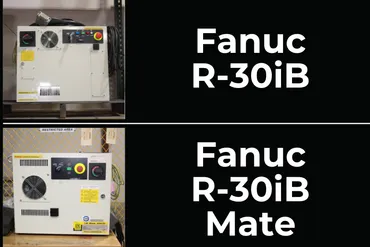
Fanuc R-30iB vs. R-30iB Mate: Controller Hardware Comparison
- Technical Components
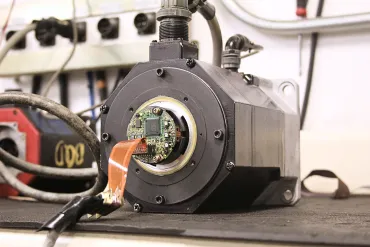
Advanced Diagnostics: Enhancing Fanuc Servo Motors For Longevity and Performance
- Technical Components
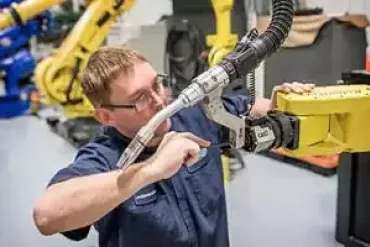
Fanuc Robotic Arm Maintenance 101: Essential Parts and Procedures
By incorporating robotic arms into manufacturing processes, companies can enjoy numerous benefits that positively affect their operations and their bottom line. Fanuc robotic arms are known for their capabilities regarding precision, elevated quality, and safer working conditions, ultimately leading to increased efficiency and profitability.
- Technical Components
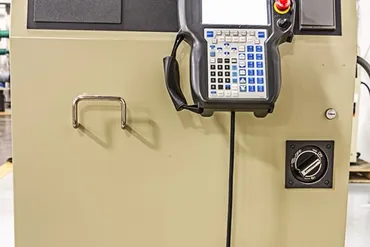
Comparing RJ3iC and R-30iA Robot Controllers
Fanuc continues to innovate by creating new, more advanced controllers, paralleling the advancement of technology. Fanuc's RJ3iC and R-30iA robot controllers are the same controller with different names in order to provide solutions for a wider range of applications.
- Technical Components
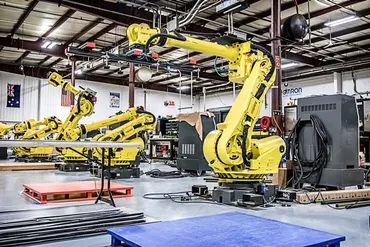
The internal parts that move the Fanuc R2000iB/165F
The Fanuc R-2000iB/165F robot can work with a variety of part sizes once the combination of all of its parts work together, including the servomotors, speed reducers, and gears. The R-2000iB/165F robot can handle a wide range of applications such as assembly, palletizing, or packaging.
Let's talk!
Request your quick quote today.