
All the pretty robotic systems
There are several different systems that need to work together in order for a robot to perform a specific application well. The robotic systems include the controller, the body, power, sensors, and tools.

A robotic system has several different systems that must work together for the robot to perform a certain application. Like the systems of the human body – nervous system, cardiovascular system, etc. – if these robotic systems do not work well together, the robot will break down, which makes them dependent on each other, like the heart is dependent on the lungs, and vice versa. These systems are the controller, the body, power, sensors, and tools.
The controller, the brain of the robot, is where the robot is programmed. It is robot system that commands the robot – it tells it when, where and how to move. It will tell a robot how tolerant an object is and adjust accordingly. This system also controls the applications the robot performs.
The metal structure of the robot, also known as the body, holds many of the other components together, much like the bone and muscular systems in the human body. Industrial robots are shaped like arms, with a shoulder, arm and wrist. These robotic systems are vital to contain all the other systems and their cabling.
The energy, the robotic power system, is supplied through an electrical source of some type, usually routed through the controller. However, some robots do use hydraulic or pneumatic power sources to run their applications.
Sensors are the vision and touch robot systems. A vision sensor can take pictures of an object so the robot knows which pieces to pick up or work with and which pieces to reject. It allows the robot to “see”. The touch sensors can be used as a way for the robot to sense when it should stop moving or slow down. This can be helpful during material handling applications, but also for safety reasons.
These robotic systems together create all the industrial robots on the market today. While it may just seem like a metal arm that moves around, it is really a quite advanced piece of equipment that has completely changed the face of manufacturing today.
Robots.com, a certified integrator of robot systems for Fanuc, Motoman, ABB, Universal Robots, and KUKA, has several model options available for an array of different applications. Robots.com helps customers customize their robot system to meet all their unique application specifications.
For more information about automating with a Robots.com customized robotic system, contact us today online or at 877-762-6881.
Related Articles
You might be also interested in:
- General Robotics Information
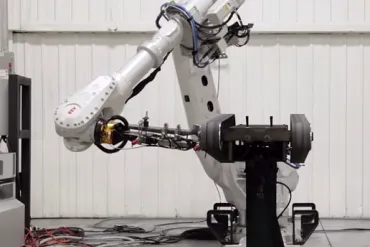
Rotating Workpieces with a Robotic Lathe
A robotic lathe can increase a companies productivity and money. Users of robotic lathes will experience an increase of 55% in productivity.
- General Robotics Information
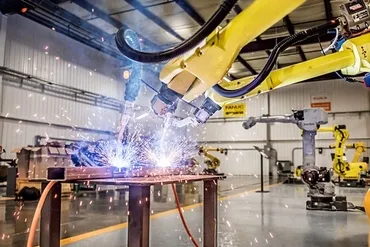
How to avoid weld smut
Weld smut can decrease the quality of a weld. That is why it is important to avoid weld smut. There are a variety of ways to keep weld smut at bay on your production line.
- General Robotics Information
Table Top Robots Solve Floor Space Issues
To help save work space, you may want to consider a table top robot. Table top robots can perform a variety of application all the while providing a reduced footprint and weight.
- General Robotics Information
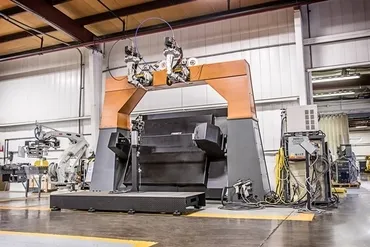
Gantry Robot Applications & Benefits
A gantry robot is hung overhead on a linear track that can move back and forth. Gantry robots are typically used for material handling applications but can also be integrated into welding production lines. Gantry robots are advantageous as they are closer to the part they are working on while also being able to work at different angles than a floor mount.
- General Robotics Information
How to Weld Stainless Steel
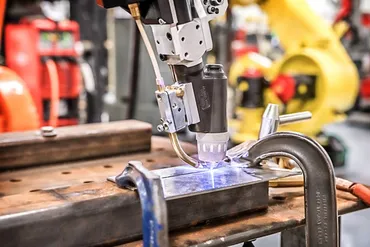
If your production line needs to weld stainless steel with industrial robots, there are a few methods to do so. Stainless steel is within a class of iron-base materials that have a certain resistance to rusting and corrosion to do the presence of chromium. Chromium helps produce a tough, impervious layer to help shield it from rust and corrosion.
- General Robotics Information
What Are Autonomous Industrial Robots? Guide to AMRs
Unlike traditional robots that require direct programming or constant oversight, autonomous robots are capable of making real-time decisions, navigating dynamic environments, and adapting to changing conditions. They can operate continuously without breaks, increasing productivity and efficiency in manufacturing and warehouse settings.
Let's talk!
Request your quick quote today.