
Gear Reduction with Harmonics
Harmonic drives have three components, a wave generator, a flex spline, and a circular spline. These drives reduce the gears on a robotic system, ultimately saving you increased maintenance costs. For more information on harmonic drives, contact Robots.com experts today.

Harmonic gears are a type of strain wave gear. There are typically 3 components to this type of drive: a wave generator, a flex spline (inner rotating gear) and a circular spline (outer rotating gear).
The wave generator is elliptical in shape and is covered by a ball bearing. The ball bearing allows independent rotation of the inner flex spine, which is powered by the wave generator. The flex spline's teeth are located on the outside of the gear. The wave generator causes the flex spline to rotate in a elliptical formation, therefore the inner gear requires less teeth than the outer circular spline. The teeth only mesh in two opposite sides of the flex spline at the same time. Click here for more information on how harmonic drives work.
What does this mean? Since the flex spline has less teeth, it can rotate slower in the opposite direction of the wave generator, but increase rotational speed for the outer circular gear. This allows for the two gears to have less impact and friction which then reduces wear. It also reduces the size and weight of the drive compared to traditional gears.
A large number of industrial robots use harmonic drives, especially Fanuc and Motoman, due to increased precision and repeatability, no backlash and high torque capacity.
You may not be shopping for a harmonic drive itself, but it's good to know what kind of gears are inside the type of robot system you purchase. This helps you understand the maintenance and lubricants required for these particular drives. Robots.com recommends using RWVG-1 SK1 Tribolube VG-1 synthetic grease for harmonic drives.
For more information, contact Robots.com today online or at 877-762-6881.
Additional sources: https://en.wikipedia.org/wiki/Harmonic_drive
Related Articles
You might be also interested in:
- Technical Components
Understanding Grease Compatibility in Multi-Robot Facilities: Why Standardizing Robot Grease is Critical for Maintenance Professionals
- Technical Components
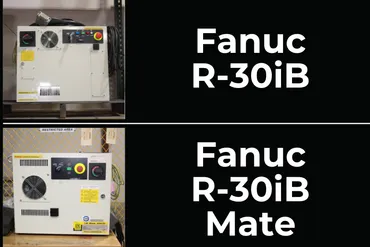
Fanuc R-30iB vs. R-30iB Mate: Controller Hardware Comparison
- Technical Components
Advanced Diagnostics: Enhancing Fanuc Servo Motors For Longevity and Performance
- Technical Components
Fanuc Robotic Arm Maintenance 101: Essential Parts and Procedures
By incorporating robotic arms into manufacturing processes, companies can enjoy numerous benefits that positively affect their operations and their bottom line. Fanuc robotic arms are known for their capabilities regarding precision, elevated quality, and safer working conditions, ultimately leading to increased efficiency and profitability.
- Technical Components
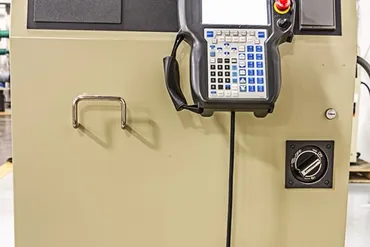
Comparing RJ3iC and R-30iA Robot Controllers
Fanuc continues to innovate by creating new, more advanced controllers, paralleling the advancement of technology. Fanuc's RJ3iC and R-30iA robot controllers are the same controller with different names in order to provide solutions for a wider range of applications.
- Technical Components
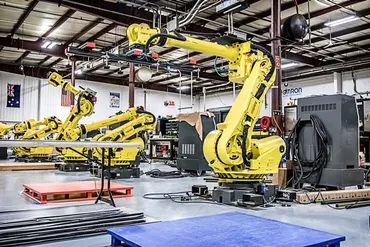
The internal parts that move the Fanuc R2000iB/165F
The Fanuc R-2000iB/165F robot can work with a variety of part sizes once the combination of all of its parts work together, including the servomotors, speed reducers, and gears. The R-2000iB/165F robot can handle a wide range of applications such as assembly, palletizing, or packaging.
Let's talk!
Request your quick quote today.