
Six-axis robots add flexibility to automotive component adhesives
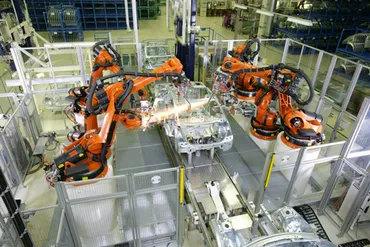
For automotive production lines, six-axis robots are the solution for added flexibility and productivity. When compared with four-axis robots, six-axis robots add high levels of flexibility and enhance the automotive adhesive component. Six axis robots can perform operations that need to meet specific cycle times.

The Game-Changer in Industrial Automation: Six-Axis Robots
Embracing Flexibility in Industrial Robotics
Flexibility is one of the most important considerations when looking at industrial robots. Six-axis robots add a great amount of flexibility to applications, as opposed to four-axis robots. KUKA Robotics ran into a manufacturer that requested a six-axis robot that added high levels of flexibility – enough flexibility to convert to any automobile type without difficulty.
The Rise of Six-Axis Robots
Six-axis robots offer a remarkable degree of flexibility, making them invaluable assets in various industrial applications. Their ability to easily adapt to different tasks and environments sets them apart, enabling more complex and versatile operations.
Case Study: Automotive Manufacturing Revolutionized by Six-Axis Robots
KUKA Robotics' collaboration with an automotive manufacturer highlights the transformative impact of six-axis robots. The manufacturer sought a robotic solution that could offer exceptional flexibility, particularly for the application of gluing automotive add-ons.
The Challenge of Versatility
The automotive industry's demand for versatility was a key driver in this collaboration. The manufacturer required a robot that could adapt seamlessly to different automobile types without compromising efficiency or accuracy.
The automotive manufacturer was looking to add flexibility with six-axis robots integrated into the application of gluing on their automotive add-on components. The level of flexibility could only be achieved with a highly adaptable six-axis robot, according to KUKA.
Integration of Six-Axis Robots in Automotive Gluing Applications
Meeting In-Line Manufacturing Demands
In-line manufacturing processes necessitate strict adherence to specific cycle times. KUKA Robotics emphasized the importance of their robots meeting these cycle times to avoid disruptions in the production line. The integration of six-axis robots ensured that the gluing application was synchronized with the injection molding process cycle, maintaining a high level of production efficiency.
Enhanced Performance and Quality
By incorporating six-axis robots, the manufacturer not only achieved greater flexibility but also improved the speed and accuracy of their operations. This enhancement led to an overall improvement in the quality of the finished products.
Since the manufacturing was “in-line,” it was completely necessary for the robots performing the operations to meet specific cycle times, KUKA stated. Without that, the production line would be compromised. The gluing application had to be within two seconds of the injection molding process cycle.
By adding this flexibility with a six-axis robot, the manufacturer not only received a versatile robot, but they also received a robot that was able to perform duties faster and with more accuracy than their human counterparts, which only improved the quality of the finished products.
The automotive company worked with KUKA and devised a system layout that optimized their gluing application while adding flexibility with robotic six-axis arms. Not only did they improve their harmonization, but they also were able to refine the application and reduce the cycle time down to 38 seconds, KUKA stated.
System Optimization and Cycle Time Reduction
Working closely with KUKA, the automotive company developed a system layout that optimized their gluing application. This collaborative effort resulted in the refinement of the application process and a significant reduction in cycle time to just 38 seconds.
Overall, the manufacturer was able to get a flexible six-axis robot that will add to their manufacturing production now and in the future as their products change.
Future-Proofing Manufacturing with Six-Axis Robots
The flexibility offered by six-axis robots ensures that manufacturers can adapt to changes in product design and process requirements over time. This adaptability is crucial for staying competitive in dynamic industrial landscapes.
Robots.com: Your Partner in Robotic Automation
As a supplier of KUKA Robotics models, Robots.com offers a range of KUKA robots tailored to meet diverse manufacturing needs. Our expert team focuses on key factors such as accuracy, repeatability, speed, and flexibility to design systems that fulfill all facility and application requirements.
Explore Automation Solutions with Robots.com
Robots.com, a supplier of KUKA Robotics models, has several KUKA robots available for purchase and customization. Our highly-qualified staff takes into account the need for accuracy, repeatability, speed and flexibility when designing a system with a client, so the system will meet all of the facility and application needs.
For more information about automating your processes with Robots.com, contact representatives online or at 877-762-6881.
Related Articles
You might be also interested in:
- Industry Solutions
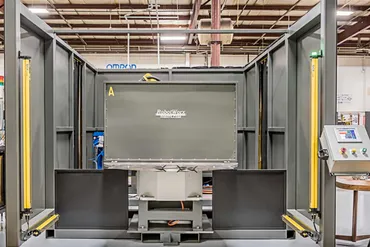
Setting up an efficient shop floor with robots
If you are considering integrating with industrial robots on your production line, it will help to plan your workspace properly for the greatest efficiency. Shop floor efficiency will be increased based on the five elements that are listed. This thoughtful layout will help you stay competitive in the manufacturing world.
- Industry Solutions
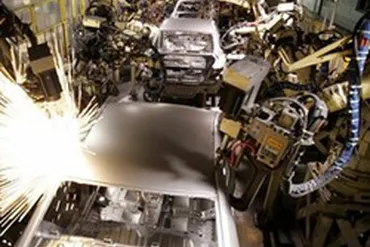
Reinventing Automotive Assembly with Robots
On the automotive assembly line, industrial robots perform faster and cheaper making them a better choice for manufacturers. The automotive assembly robots can be fitted with vision, making them more precise and create a more consistent product.
- Industry Solutions
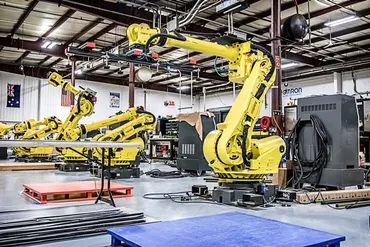
Foundry and Lean Manufacturing in Clyde, Ohio
The state of Ohio has a wide range of manufacturing businesses that have integrated industrial robots to improve their processes. The robotic technology that has been integrated has helped industries of all types such as steel cutting and molding plastics.
- Industry Solutions
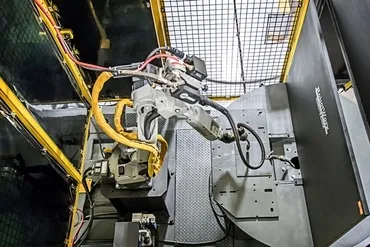
They Can Take The Heat - Foundry Robots
A foundry robot can work in hazardous conditions without being damaged or effected. They help to remove humans form the harmful environment and hazardous materials that are present during this application. Foundry robots are up to the heat challenge and help to successfully complete a wide range of tasks in a more productive and efficient manner.
- Industry Solutions
Automotive Machine Loading Robots
Using machine loading industrial robots on the automotive line has increased the production speeds, cut costs, and increased the product quality. Machine loading robots are able to handle a variety of jobs and accomplish the job of a human worker in half the time.
- Industry Solutions
Revolutionizing Welding: Reviewing Fanuc Cobots vs. Traditional Industrial Robot Welders
In recent years, the welding industry has experienced a remarkable transformation, all thanks to the introduction of collaborative robots, or cobots. These highly versatile and user-friendly robots have emerged as a game-changer, offering an alternative to traditional industrial robot welders. In this blog post, we embark on a journey to explore the world of cobots in welding, comparing them to their traditional counterparts, uncovering their industry advantages, and revealing how they boost production while maintaining impeccable quality standards.
Let's talk!
Request your quick quote today.