
Understanding PLC, PanelView, and HMI Robot Interfaces
A PLC, or Programmable Logic Controller, is a small digital computer that controls the input and output positions to make sure the parts of the robot work together. An HMI, or human machine interface, is connected to the PLC. If you are interested in learning more about PLCs or HMIs, contact Robots.com representatives today.

The standard system for automation
A human-machine interface (HMI) connects to a separate programmable logic controller (PLC). These systems have been in place for decades among the industrial automation community. They help the user keep track of their robot system with a PLC panel view or HMI interface. These operator devices are designed to monitor and control the system. Operators can tell the system's status, adjust application parameters, and input and output positions, or run master programs.
Programmable Logic Controller (PLC)
PLCs are small digital computers that control input and output positions to make sure every component in the robot system such as peripherals, robot, turntable, etc., work together in harmony.
Human-machine interface (HMI)
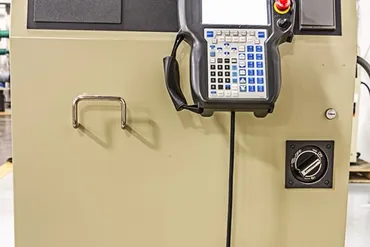
An HMI is the controller operating panel that consists of a numeric keypad to input data and a control screen. HMI operator control stations are used for programming and data gathering. HMI interfaces allow companies to run master programs and control input/output positions.
Technology is rapidly advancing and more combined HMI/PLC units, with an all-in-one touchscreen and logic controller, are being used.
The combination of a PLC and HMI system is becoming more popular and readily available as hardware and software technology continues to rapidly advance. All of the components of the control system are rapidly evolving to the point of greater functionality where a combined device is a compelling alternative.
Benefits of a combined system
HMI-PLC combined technology is becoming a more popular alternative as it is lower in cost, causing the reduction of equipment, while also easing system functionality. The intelligence of technology is skyrocketing at exponential rates which is enabling industrial networking mechanics to interface at a more advanced and remote level. In addition, the combined units take up less space, minimize wiring, utilize a single power source, and only require one network connection.
Benefits of a separate system
Right now, separate systems do allow the selection of a broader range of processors and enhanced memory capacities. This separate system is also available for safety applications. Additionally, the motion control and communications are more extensive than a combined unit. The I/O count and Analog I/O are also more abundant.
Contact Robots.com
Regardless of the system you choose for your automation integration, all of the components (whether combined or separate) are built to last and work exceptionally well together. Robots.com will help you find the right PLC and/or HMI interface to support your robot system. Contact our experts for more details at 877-762-6881 or submit our contact form.
Related Articles
You might be also interested in:
- Technical Components
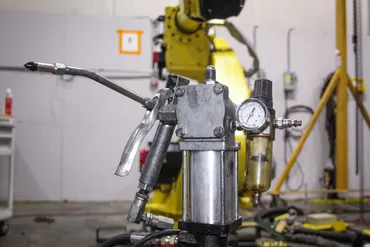
Understanding Grease Compatibility in Multi-Robot Facilities: Why Standardizing Robot Grease is Critical for Maintenance Professionals
- Technical Components
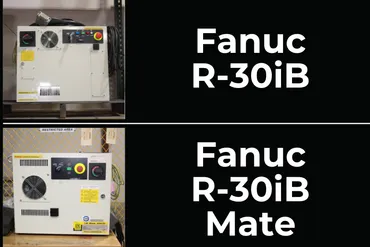
Fanuc R-30iB vs. R-30iB Mate: Controller Hardware Comparison
- Technical Components
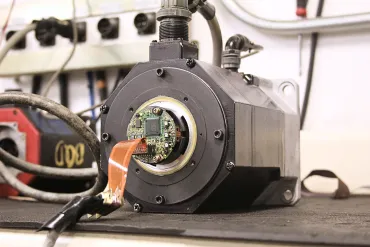
Advanced Diagnostics: Enhancing Fanuc Servo Motors For Longevity and Performance
- Technical Components
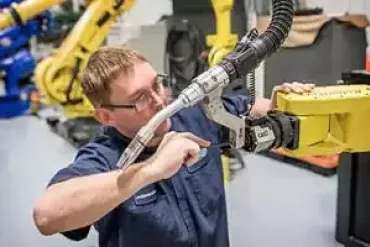
Fanuc Robotic Arm Maintenance 101: Essential Parts and Procedures
By incorporating robotic arms into manufacturing processes, companies can enjoy numerous benefits that positively affect their operations and their bottom line. Fanuc robotic arms are known for their capabilities regarding precision, elevated quality, and safer working conditions, ultimately leading to increased efficiency and profitability.
- Technical Components
Comparing RJ3iC and R-30iA Robot Controllers
Fanuc continues to innovate by creating new, more advanced controllers, paralleling the advancement of technology. Fanuc's RJ3iC and R-30iA robot controllers are the same controller with different names in order to provide solutions for a wider range of applications.
- Technical Components
The internal parts that move the Fanuc R2000iB/165F
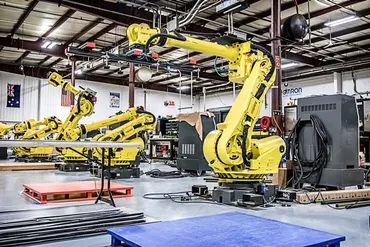
The Fanuc R-2000iB/165F robot can work with a variety of part sizes once the combination of all of its parts work together, including the servomotors, speed reducers, and gears. The R-2000iB/165F robot can handle a wide range of applications such as assembly, palletizing, or packaging.
Let's talk!
Request your quick quote today.