
Grease Change Intervals: Manufacturer Guidelines vs Real-World Experience
In industrial automation, robotic systems are essential for manufacturing efficiency, precision, and productivity. Whether working with new or refurbished robots, operators must ensure that every component remains in optimal condition. Robot grease management is one of the most critical yet often overlooked aspects of robot maintenance.
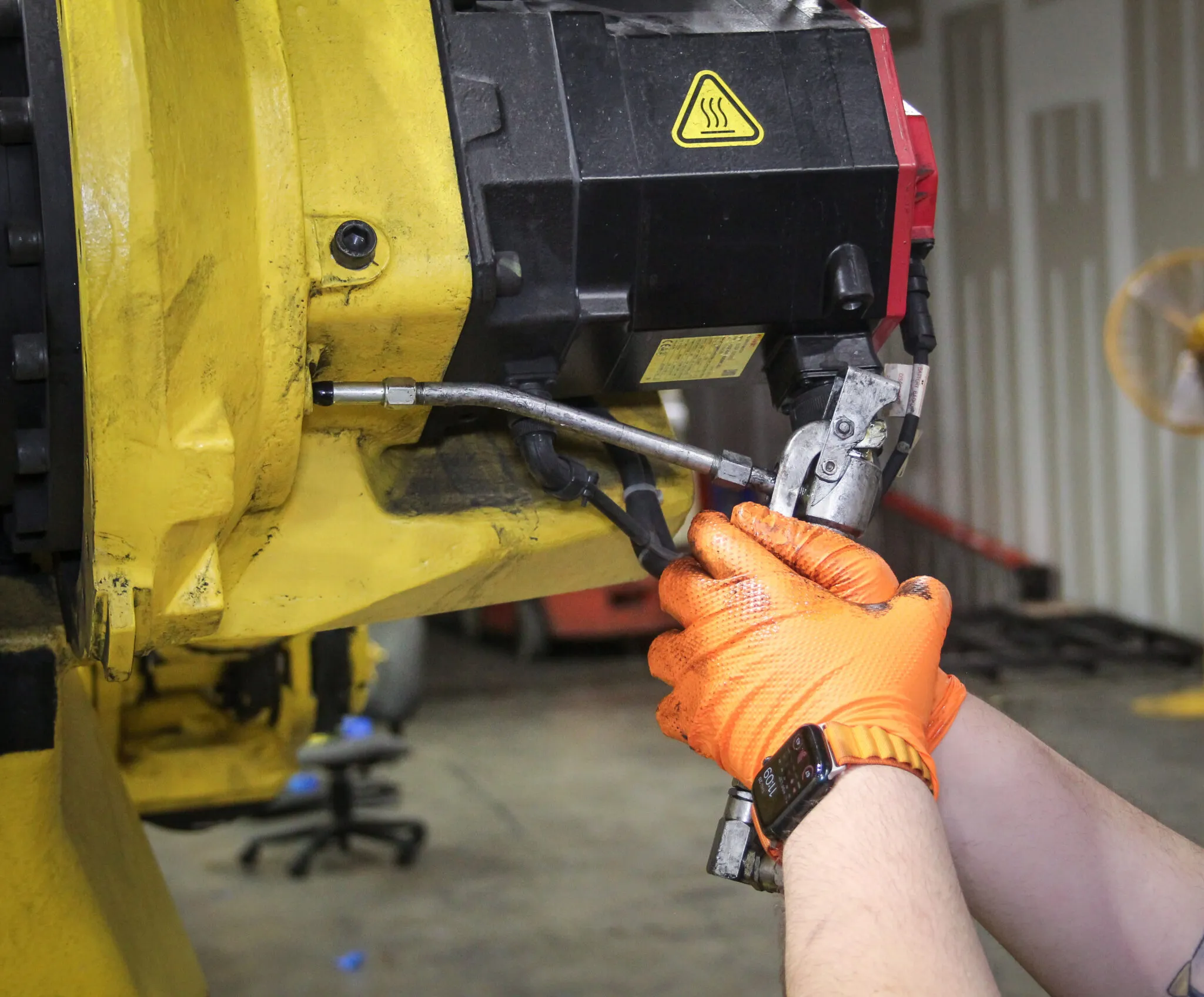
Proper lubrication prevents premature wear, reduces downtime, and extends the life of critical robotic parts such as gears, bearings, and seals. But how often should you change robot grease? Original Equipment Manufacturer (OEM) recommendations provide general guidelines, but real-world conditions may require a different approach.
In this guide, we’ll explore OEM grease change intervals, compare them with real-world robot maintenance data, and explain how operators can determine the optimal grease change schedule for their robotic systems. We’ll also provide practical steps for maintaining a reliable lubrication schedule and discuss automated greasing versus manual greasing.
OEM Grease Change Recommendations: The Manufacturer’s Perspective
Major robot manufacturers like FANUC, ABB, KUKA, and Motoman provide detailed grease change intervals in their technical documentation. These intervals are referenced in your OEM manuals.
Robot grease intervals typically range from 3,850 to 11,000 hours of operation. Some applications, especially high-precision tasks, may require annual or biannual grease changes regardless of hours. The type of grease used also matters—VIGO grease, for example, is specifically formulated for certain FANUC robots and has its unique schedule.
Factors That Affect OEM Grease Recommendations
While OEM specs are a great starting point, you need to factor in variables specific to your operation:
1. Brand-Specific Requirements
Each robot brand requires specific grease types and maintenance intervals. For instance, KUKA and ABB use synthetic blends that are different from Motoman or FANUC, and using the wrong grease can damage components.
2. Operating Conditions
Robots in high-speed, high-load, or high-temperature applications—like palletizing or welding—experience more wear and require frequent lubrication.
3. Grease Type
Some greases degrade faster than others, and synthetic greases often perform better in extreme conditions but still require regular checks.
Sticking to OEM guidelines helps:
- Reduce premature wear on gears and bearings
- Ensure compatibility with approved lubricants
- Maintain warranties and service agreements
Real-World Experience: How Robot Operators Adjust Grease Schedules
On the factory floor, things don’t always go by the book. Real-world operators often adjust grease change intervals based on usage, workload, and environment.
Many industrial facilities modify OEM guidelines due to:
- 24/7 operations – Heavy usage robots need grease changes more often
- Environmental factors – Dust, humidity, and chemical exposure can contaminate grease faster
- Performance monitoring – Operators use grease analysis and other tools to assess lubricant condition
Determining the Optimal Grease Change Schedule for Your Robots
No two robots—or factories—are alike. To find the correct grease change interval, consider:
1. Operating Hours vs. Workload
A high-speed pick-and-place robot running 20 hours per day wears down grease faster than a slow-moving robot used occasionally.
2. Grease Compatibility
Using the wrong grease can do more harm than good. Always match the grease to the robot's requirements.
3. Environmental Conditions
If your robots operate in harsh factory settings, such as near welders, paint booths, or dusty conveyors, expect to replace grease more frequently.
4. Signs of Degradation
Look for symptoms like increased joint noise, inconsistent movement, and overheating in arms or axes.
Creating and Adhering to a Grease Change Schedule
Here's a step-by-step guide for maintaining your robotic systems:
- Start with OEM guidelines as a base
- Inspect grease quality regularly using visual checks and lab analysis
- Adjust schedules based on workload and environment
- Log all maintenance activity and note wear patterns over time
- Train staff to recognize early signs of grease failure
- Use OEM recommended grease and lubricants
- Consider automated greasing systems for 24/7 robots
Why a Grease Change Schedule is Critical
Maintaining a proper robot grease schedule ensures:
- Longer life for robotic systems
- Fewer breakdowns and emergency service calls
- Less wear on expensive components like robot gears and bearings
- More consistent output and better performance in industrial automation
Grease can become contaminated or break down without a schedule, leading to catastrophic failures and thousands in repairs.
Common Greasing Mistakes to Avoid
Even experienced operators make mistakes. Here are the top ones to watch out for:
1. Using the Wrong Grease
Robots need different lubricants—VIGO grease is most commonly used for Fanuc robots but refer to your OEM for specific grease and lubricant products to use.
2. Overgreasing or Undergreasing
Too much grease can cause excess pressure and overheating. Too little leads to friction, wear, and eventual part failure
3. Ignoring Contaminated Grease
Dirty grease should be replaced immediately—don't wait for a scheduled interval if something looks off.
Keep Your Robots Moving with T.I.E. Industrial
Creating and sticking to a targeted grease change schedule is one of the most cost-effective ways to keep your robots in top condition. While OEM recommendations are a helpful starting point, real-world data and predictive tools provide a smarter way to manage lubrication.
At T.I.E. Industrial, we help manufacturers extend the life of their equipment with high-quality robot replacement parts, refurbished robots, and expert maintenance support. Whether you're looking for grease, automated greasing systems, or want to optimize your manual greasing routine, look no further than T.I.E. Industrial.
Visit T.I.E. Industrial today to browse our inventory of grease products, refurbished robots, and robotic replacement parts. Our team is here to help you keep your factory running like a well-oiled machine.
Related Articles
You might be also interested in:
- Robotics Applications
- Featured
Latest Advancements in Material Cutting Robotics
Read about the latest technological advancements in robotic material cutting.
- Innovation & Trends
- Featured
Emerging 3D Vision Technologies for Industrial Robots
Learn about the emerging 3D vision technology that businesses are using for industrial robot applications.

- Innovation & Trends
- Featured
Most Popular Industrial Robotic Applications for 2021 and Projections
Explore the most popular application trends of 2021 and what to expect in the future.
- Robotics Applications
- Featured
MAG Welding Defined
Automating your MAG welding process will help to bring faster and more consistent cycle times. A robotic MAG welder will also help to improve the weld quality, helping your customer's become more satisfied with the final product. If you are interested in integrating a new or refurbished robotic system, contact Robots.com experts today.
- Manufacturers
- Featured
AccuFast II Tackles Seams Quickly and with Quality
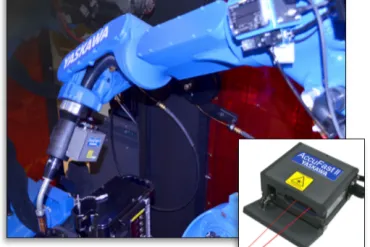
Motoman provides users with add-on features to help enhance the seam finding for their automated welding line. AccuFast II offers improved sensor capabilities that provide even higher amounts of reliability. It provides more readings for a wider range of materials and angles not formerly feasible.
- Robotics Applications
- Featured
Flexible Manufacturing Lines
Each year the automation industry continues to innovate and bring solutions that will improve the productivity, flexibility, and efficiency on a wide range of production lines. This is seen with the flexible manufacturing that enables a robot to work on different types of products in the same workcell. Flexible manufacturing lines help to provide an increase in productivity and manufacturing volume.