
How to avoid weld smut
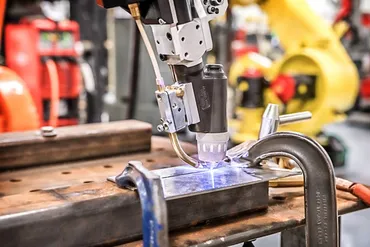
Weld smut can decrease the quality of a weld. That is why it is important to avoid weld smut. There are a variety of ways to keep weld smut at bay on your production line.

When you think of the word “smut,” welding may not be the first thing that comes to mind. However, the literal definition of smut is “a small flake of soot or other dirt.” This definition falls in line perfectly with weld smut, which has been dirtying up welding since the beginning.
According to an article in The Fabricator, smut is caused by the boiling points of aluminum and magnesium being lower than the temperatures that are reached during arc welding. This causes the filler metal to actually evaporate during the welding process. This causes imperfections along the weld, the smut – a black substance that lowers the quality of the weld.
There are a few good ways to keep your welds free of smut. First, if you are using a shielding gas welding for your industrial robot, you need to make sure that the amount of shielding gas available is efficient at all times. The article states that if the gas becomes marginal, aluminum and magnesium are oxidized to become welding smut.
Another way to keep your robot welding smut free is to make sure that the torch angle on your robot is programmed correctly. The push angle must be right during these welding processes, or smut will occur.
Smut is more common in welding like MIG welding, rather than TIG welding, because metal filler is getting transferred across an arc. MIG welding gets hotter than TIG welding, which cases more evaporation and the possibility for more smutted welding.
Robots.com will get any company the best new or refurbished robotics system for their company – one that will keep their company free of welding smut. If you are looking to automate your processes, contact us online or at 877-762-6881.
Related Articles
You might be also interested in:
- General Robotics Information
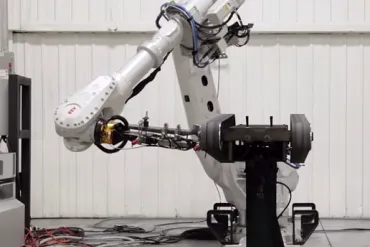
Rotating Workpieces with a Robotic Lathe
A robotic lathe can increase a companies productivity and money. Users of robotic lathes will experience an increase of 55% in productivity.
- General Robotics Information
Table Top Robots Solve Floor Space Issues
To help save work space, you may want to consider a table top robot. Table top robots can perform a variety of application all the while providing a reduced footprint and weight.
- General Robotics Information
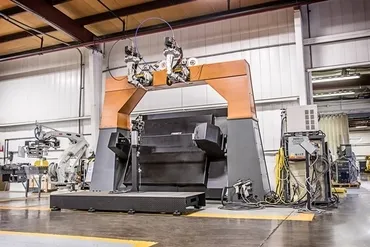
Gantry Robot Applications & Benefits
A gantry robot is hung overhead on a linear track that can move back and forth. Gantry robots are typically used for material handling applications but can also be integrated into welding production lines. Gantry robots are advantageous as they are closer to the part they are working on while also being able to work at different angles than a floor mount.
- General Robotics Information
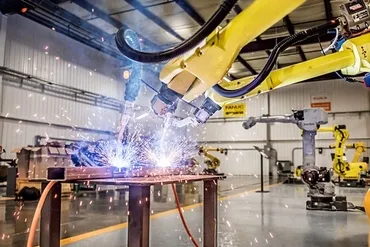
How to Weld Stainless Steel
If your production line needs to weld stainless steel with industrial robots, there are a few methods to do so. Stainless steel is within a class of iron-base materials that have a certain resistance to rusting and corrosion to do the presence of chromium. Chromium helps produce a tough, impervious layer to help shield it from rust and corrosion.
- General Robotics Information
What Are Autonomous Industrial Robots? Guide to AMRs
Unlike traditional robots that require direct programming or constant oversight, autonomous robots are capable of making real-time decisions, navigating dynamic environments, and adapting to changing conditions. They can operate continuously without breaks, increasing productivity and efficiency in manufacturing and warehouse settings.
- General Robotics Information
What Are Six-Axis Robots? A Comprehensive Definition
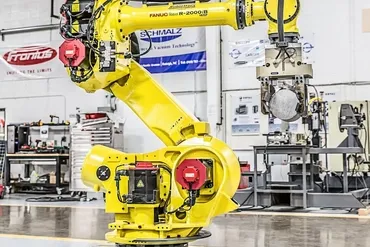
Industrial robots have various axis configurations. The vast majority of articulated robots, however, feature six axes, also called six degrees of freedom. 6-axis robots allow for greater flexibility and can perform a wider variety of applications than robots with fewer axes.
Let's talk!
Request your quick quote today.