
Improving Tool Engineering with Robotics
In order to help plan the processes of manufacturing, there is a specialty field called tool engineering. This field helps to develop tools and machines and also to integrate them to help increase the effectiveness on the production line.

Tool engineering, a specialty field of industrial engineering, exists to plan the processes of manufacture. Workers in this field develop tools and machines and integrate facilities to produce products. A background in tool engineering requires study in the areas of jig design, press tool design, die casting design, plastic molds design, and cutting tools design.
Tool engineers traditionally worked from engineering drawings to mark out a design on raw material. Manually controlled machine tools, such as lathes, milling machines, grinding machines, and jig borers and grinders, would assist the engineer in cutting the size and shape of the design. Computer-aided design and computer-aided manufacturing along with CNC machine tools have now taken the place of the manual machine tools.
Several companies specialize in tool engineering. L & Z Tool & Engineering, Inc. claims to be the industry leader in engineering and creation of plastic injection molds and die cast dies. They also specialize in design, engineering, prototypes, precision tooling, and single multi-tool fabrication. Manufacturing a project involves creating a working prototype by using CAD technology. Next, the tool engineer creates a model of the parts in a 3-D format. Problems are anticipated and solved in the next step, and then 3-D design software creates a mold design to be reviewed by the customer.
Oak Ridge Tool-Engineering, Inc. promises to provide project management, engineering, and quality craftsmanship in precision tooling, machining, fabrication, and manufacturing. They custom-design mechanical equipment and fabricated metal products for the aerospace, defense, and energy markets. They have created a wide range of products such as a monochromator shield for HFIR cold-neutron, a JSF window assembly tool, and a Delta Reusable shipping container.
Machine Tool Engineering specializes in high-precision CNC turning, milling, and grinding to assist customers with prototyping, and short or long run production.
Each company offers tool engineering with a promise of customer satisfaction.
Robots.com works with customers to provide the best industrial robot setup in their facility. This includes prototype tooling which is concept tooling of what the part will be working with. If you would like to learn more about industrial robots and their tooling, contact Robots.com online or at 877-762-6881.
Related Articles
You might be also interested in:
- Industry Solutions
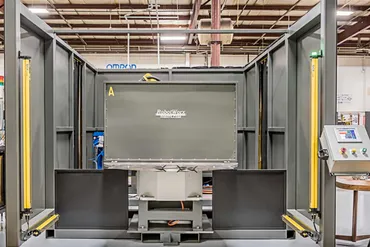
Setting up an efficient shop floor with robots
If you are considering integrating with industrial robots on your production line, it will help to plan your workspace properly for the greatest efficiency. Shop floor efficiency will be increased based on the five elements that are listed. This thoughtful layout will help you stay competitive in the manufacturing world.
- Industry Solutions
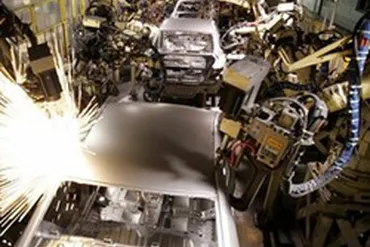
Reinventing Automotive Assembly with Robots
On the automotive assembly line, industrial robots perform faster and cheaper making them a better choice for manufacturers. The automotive assembly robots can be fitted with vision, making them more precise and create a more consistent product.
- Industry Solutions
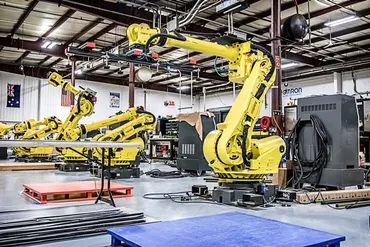
Foundry and Lean Manufacturing in Clyde, Ohio
The state of Ohio has a wide range of manufacturing businesses that have integrated industrial robots to improve their processes. The robotic technology that has been integrated has helped industries of all types such as steel cutting and molding plastics.
- Industry Solutions
Six-axis robots add flexibility to automotive component adhesives
For automotive production lines, six-axis robots are the solution for added flexibility and productivity. When compared with four-axis robots, six-axis robots add high levels of flexibility and enhance the automotive adhesive component. Six axis robots can perform operations that need to meet specific cycle times.
- Industry Solutions
They Can Take The Heat - Foundry Robots
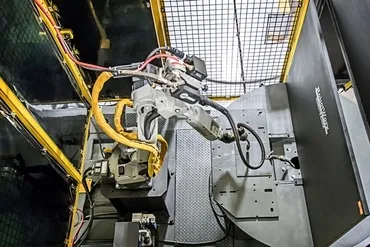
A foundry robot can work in hazardous conditions without being damaged or effected. They help to remove humans form the harmful environment and hazardous materials that are present during this application. Foundry robots are up to the heat challenge and help to successfully complete a wide range of tasks in a more productive and efficient manner.
- Industry Solutions
Automotive Machine Loading Robots
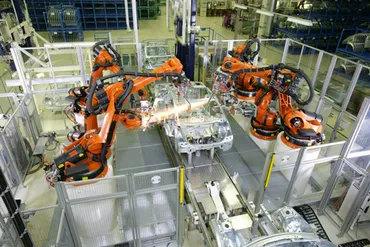
Using machine loading industrial robots on the automotive line has increased the production speeds, cut costs, and increased the product quality. Machine loading robots are able to handle a variety of jobs and accomplish the job of a human worker in half the time.
Let's talk!
Request your quick quote today.