
Plugging It In with Controller Boards
A robot controller helps to program and run the robotic system. Without a controller, the robot would have now way to perform the necessary complex applications. The controller has a wide range of controller boards that are inside the robot controller, helping connect all of the wires and plugs within.

A robot controller is the brain of the entire robotic system. Without it, a robot would have no way of knowing the programming it needed to perform its complex applications. Controller boards are found inside the robot controller, and they are the place where the magic starts – where all of the wires and cables plug into the controller. Those wires and cables are the information highway from the controller to the robotic arm.
There are many different types of controller boards, but in today’s USB market, many of them have USB ports that allow for easy plug-in and unplugging for replacement or repair. Each controller board can control a variety of items. For example, one robotic controller board may power as many as 16 servo motor systems – the systems that help the robot to move and function properly. All of those motors can be controlled by one small board in the controller. Learn more about Universal robot Controllers here.
One of the best things about controller boards is their ease of use. As mentioned above, it is an easier interface because wires can be plugged in to a USB port, something that is common in several different electronic devices today. This makes training operators and technicians easier because the devices are more common and have an easier interface. A controller board is also usually well-labeled, so there is little second guessing as to what goes where.
Are you interested in knowing more about controller boards and their purposes? If so, give Robots.com a call today. Robots.com is a certified integrator for several different robotics companies, including Fanuc. Motoman, KUKA, Universal Robots, and ABB. Our staff will work with you to ensure that you have the best robotics systems available for your facility.
For more information, contact Robots.com today online or at 877-762-6881.
Related Articles
You might be also interested in:
- Technical Components
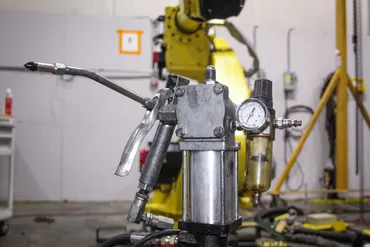
Understanding Grease Compatibility in Multi-Robot Facilities: Why Standardizing Robot Grease is Critical for Maintenance Professionals
- Technical Components
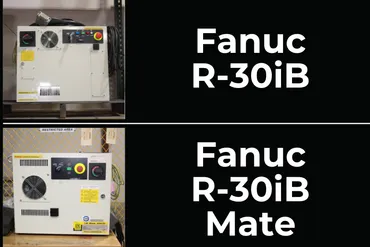
Fanuc R-30iB vs. R-30iB Mate: Controller Hardware Comparison
- Technical Components
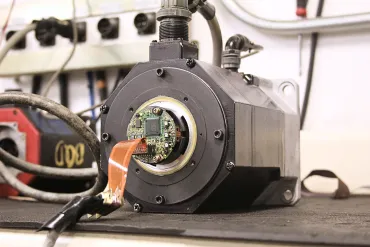
Advanced Diagnostics: Enhancing Fanuc Servo Motors For Longevity and Performance
- Technical Components
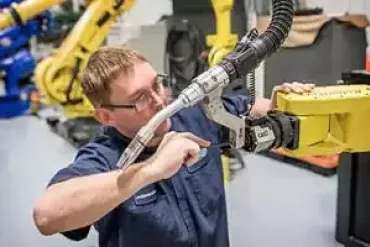
Fanuc Robotic Arm Maintenance 101: Essential Parts and Procedures
By incorporating robotic arms into manufacturing processes, companies can enjoy numerous benefits that positively affect their operations and their bottom line. Fanuc robotic arms are known for their capabilities regarding precision, elevated quality, and safer working conditions, ultimately leading to increased efficiency and profitability.
- Technical Components
Comparing RJ3iC and R-30iA Robot Controllers
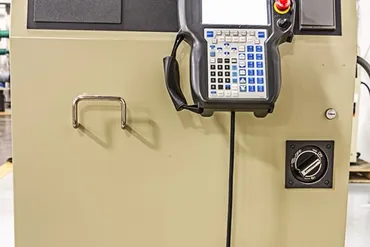
Fanuc continues to innovate by creating new, more advanced controllers, paralleling the advancement of technology. Fanuc's RJ3iC and R-30iA robot controllers are the same controller with different names in order to provide solutions for a wider range of applications.
- Technical Components
The internal parts that move the Fanuc R2000iB/165F
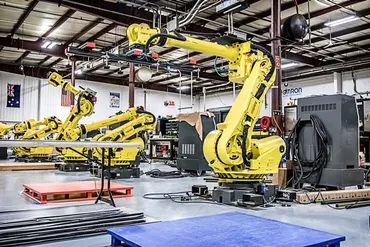
The Fanuc R-2000iB/165F robot can work with a variety of part sizes once the combination of all of its parts work together, including the servomotors, speed reducers, and gears. The R-2000iB/165F robot can handle a wide range of applications such as assembly, palletizing, or packaging.
Let's talk!
Request your quick quote today.