
Setting up an efficient shop floor with robots
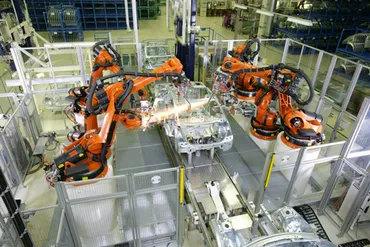
If you are considering integrating with industrial robots on your production line, it will help to plan your workspace properly for the greatest efficiency. Shop floor efficiency will be increased based on the five elements that are listed. This thoughtful layout will help you stay competitive in the manufacturing world.

Embracing Automation for Competitive Manufacturing
In the ever-evolving landscape of manufacturing, staying competitive often hinges on efficiency. As the demand to match the pace of low-cost producers grows, cutting-edge automation systems emerge as the key solution. Five pivotal elements play a crucial role in enhancing shop floor efficiency.
Five elements contribute to increased shop floor efficiency. As efficiency increases, manufacturers are able to compete with low-cost producers. Cutting-edge automation systems are the solution manufacturers are turning to.
1. Robot Milling Techniques
The first element is robot milling techniques. Robots are precise and accurate, which means that robotic milling is well suited for robotic rapid prototyping applications. It is also useful for machining softer materials, like aluminum. Because a robotic arm costs significantly less than a full machine tool, machining with robots increases cost-effectiveness.
2. The Advancement of Six-Axis Robots
As robotic technology progresses, six-axis robots are becoming faster. They offer greater speed and payload capacities for applications like material handling, packaging, and testing. KUKA offers low-cost, shelf-mounted robots that open up factory floor space while increasing efficiency.
3. Integration of Vision-Based Systems
The third element is the incorporation of vision-based systems. Vision-based robots are important because of the range of new applications they make possible. Users can develop and deploy vision and guidance applications with greater ease and speed than ever before.
4. Cutting-Edge Automation Software
The latest automation software also contributes to increased shop floor efficiency. The latest software can track factory systems and manufacturers’ equipment effectiveness. Fanuc’s Machine Tool Efficiency Shop Floor Intelligence Software solution allows manufacturers to gather real-time availability, performance and quality data from machine tools. This enables them to evaluate shop-floor performance.
5. Advanced Conveyor Systems
Finally, shop floor efficiency is increased by the latest conveyor systems for assembly and material handling applications. Conveyors are used in many industries: medical, communications, electronics, and automotive, as well as increasingly in machine tools.
The Importance of Shop Floor Scheduling
Shop floor scheduling in a robotic environment is also crucial to success. Management and task scheduling are also vital for companies that want to improve their processes, increase efficiency, reduce production time, and capitalize on their investment.
Robots.com: Your Partner in Automation
Robots.com provides Integration-Ready robotic systems. We have worked with thousands of companies to come up with the best solution to automate the most efficient shop floor. If you would like more information on incorporating a robot contact us today online or at 877-762-6881.
Related Articles
You might be also interested in:
- Industry Solutions
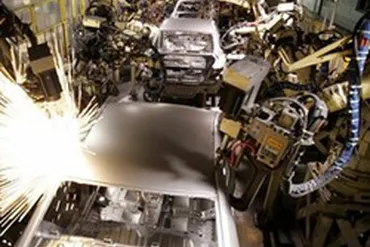
Reinventing Automotive Assembly with Robots
On the automotive assembly line, industrial robots perform faster and cheaper making them a better choice for manufacturers. The automotive assembly robots can be fitted with vision, making them more precise and create a more consistent product.
- Industry Solutions
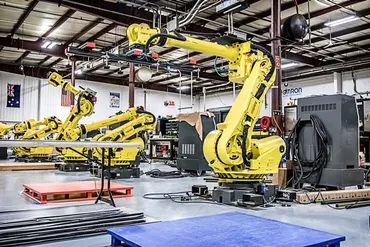
Foundry and Lean Manufacturing in Clyde, Ohio
The state of Ohio has a wide range of manufacturing businesses that have integrated industrial robots to improve their processes. The robotic technology that has been integrated has helped industries of all types such as steel cutting and molding plastics.
- Industry Solutions
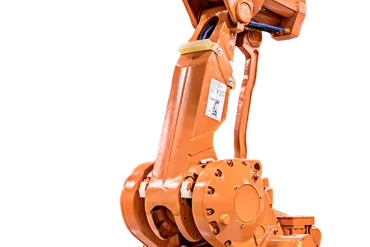
Six-axis robots add flexibility to automotive component adhesives
For automotive production lines, six-axis robots are the solution for added flexibility and productivity. When compared with four-axis robots, six-axis robots add high levels of flexibility and enhance the automotive adhesive component. Six axis robots can perform operations that need to meet specific cycle times.
- Industry Solutions
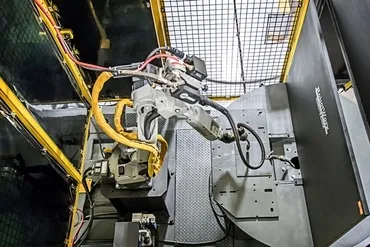
They Can Take The Heat - Foundry Robots
A foundry robot can work in hazardous conditions without being damaged or effected. They help to remove humans form the harmful environment and hazardous materials that are present during this application. Foundry robots are up to the heat challenge and help to successfully complete a wide range of tasks in a more productive and efficient manner.
- Industry Solutions
Automotive Machine Loading Robots
Using machine loading industrial robots on the automotive line has increased the production speeds, cut costs, and increased the product quality. Machine loading robots are able to handle a variety of jobs and accomplish the job of a human worker in half the time.
- Industry Solutions
Revolutionizing Welding: Reviewing Fanuc Cobots vs. Traditional Industrial Robot Welders
In recent years, the welding industry has experienced a remarkable transformation, all thanks to the introduction of collaborative robots, or cobots. These highly versatile and user-friendly robots have emerged as a game-changer, offering an alternative to traditional industrial robot welders. In this blog post, we embark on a journey to explore the world of cobots in welding, comparing them to their traditional counterparts, uncovering their industry advantages, and revealing how they boost production while maintaining impeccable quality standards.
Let's talk!
Request your quick quote today.