
The Evolution of Fanuc Robot Software: What Maintenance Managers Need to Know
In the last several decades, robots have become increasingly indispensable in numerous industries, from automotive to medical to logistics. Among the leading providers of industrial robots, Fanuc is renowned for its cutting-edge technology and reliable performance.
As maintenance managers overseeing the smooth operation of manufacturing facilities, understanding the evolution of Fanuc robot software is important to provide continuous, high-quality performance. This article will delve into the evolution of Fanuc robot software, highlighting what maintenance managers need to know regarding the latest innovations to optimize their operations.
The Foundation: Fanuc Robot Software Basics
Robotic software refers to the programming and control systems that enable robots to perform various tasks autonomously or semi-autonomously. Fanuc robotic software offers a range of software components designed to facilitate robot operation, communication, and interaction with their environment.
Operating System (OS). Fanuc robotic systems typically run on specialized operating systems tailored to their hardware requirements and provide the framework for managing hardware resources, scheduling tasks, and executing software programs.
Motion Control Software. This governs the movement of robot joints, ensuring precise positioning and trajectory execution by translating high-level commands into low-level motor control signals, and allows robots to navigate their environment and manipulate objects.
Programming Environment. These tools enable users to create, edit, and debug robot programs. They may feature graphical interfaces for visual programming or scripting languages for text-based coding, catering to users with varying levels of programming expertise.
Sensor Integration. Fanuc robotic software facilitates sensor integration, enabling robots to collect and process sensor data for navigation, object detection, and environment mapping tasks.
Path Planning and Trajectory Generation. Robotic software for applications involving motion in constrained environments or around obstacles. These algorithms compute optimal paths and trajectories for robots to follow while avoiding collisions and optimizing performance metrics such as speed and energy consumption.
Vision and Perception. It enables robots to interpret visual information and make informed decisions based on their surroundings. Fanuc robotic software incorporates computer vision algorithms for object recognition, pose estimation, and scene understanding, empowering robots to interact intelligently with their environment.
Communication Protocols. Includes communication protocols and interfaces for exchanging data with external devices, control systems, and networked infrastructure. These protocols enable seamless integration with other robotic systems, manufacturing equipment, and higher-level control systems, facilitating collaborative operation and data sharing.
Evolutionary Milestones: Advancements in Fanuc Robot Software
Enhanced Programming Capabilities. Fanuc has continuously enhanced its software to offer intuitive programming interfaces that streamline robot setup and operation. With user-friendly programming languages, maintenance managers can quickly develop and modify robot tasks, reducing downtime and optimizing production schedules.
Integration with Industry 4.0 Technologies. In response to the rise of Industry 4.0, Fanuc has evolved its software to enable seamless integration with IoT (Internet of Things) platforms and data analytics tools. This integration allows maintenance managers to monitor robot performance in real time, identify potential issues proactively, and implement predictive maintenance strategies to prevent costly breakdowns.
Advanced Vision Systems. By incorporating vision-guided robotics, Fanuc robots can adapt to dynamic environments, accurately identify and handle objects of varying shapes and sizes, and perform complex tasks with unparalleled precision. Vision-enabled Fanuc robots enhance efficiency and flexibility from quality inspection to pick-and-place applications.
Machine Learning and AI. Leveraging the power of machine learning and artificial intelligence (AI), Fanuc robots have adaptive learning capabilities. Through continuous data analysis and feedback loops, Fanuc robots can optimize their performance over time, autonomously adjusting parameters to achieve higher levels of productivity and quality. Maintenance managers can leverage AI-driven diagnostics and predictive analytics to optimize robot performance and anticipate maintenance needs.
Collaborative Robots (Cobots). The emergence of collaborative robots, or cobots, has introduced new paradigms in robotic software design. Unlike traditional industrial robots, cobots are designed to work alongside human operators in shared workspaces. Robotic cobot software emphasizes safety features such as collision detection, force limiting, and adaptive control, enabling safe and seamless collaboration between humans and robots in manufacturing settings.
Fanuc Robot Software Impact on Maintenance Management
As maintenance managers, staying abreast of Fanuc robot software capabilities is essential for optimizing operational efficiency and maximizing ROI. By harnessing the latest advancements, maintenance teams can:
Minimize downtime. With intuitive programming interfaces and predictive maintenance capabilities, maintenance managers can minimize unplanned downtime, ensuring uninterrupted production workflows.
Enhance productivity. Maintenance managers can leverage Industry 4.0 integration and AI-driven optimizations to unlock new productivity levels, drive higher throughput, and reduce cycle times.
Ensure Quality and Accuracy. Vision-guided robotics and advanced algorithms enable Fanuc robots to maintain consistent quality and accuracy, meeting stringent manufacturing standards and customer expectations.
Optimize resource allocation. By analyzing real-time data and performance metrics, maintenance managers can optimize resource allocation and deploy personnel and spare parts more effectively to address critical maintenance needs.
Overall, the evolution of robotic software in manufacturing settings has led to more versatile, intelligent, and interconnected robotic systems capable of addressing a wide range of production challenges. From basic automation tasks to complex collaborative applications, modern robotic software continues to drive innovation and transformation in the manufacturing industry.
Partnering with T.I.E. Industrial for Fanuc Robot Solutions
The evolution of Fanuc robot software represents a journey of innovation and progress, empowering maintenance managers to achieve new levels of efficiency, productivity, and quality in manufacturing operations. By embracing the latest advancements and partnering with trusted suppliers like T.I.E. Industrial, maintenance managers can navigate the complexities of modern manufacturing with confidence, driving sustainable growth and success for their organizations.
Contact T.I.E. Industrial today for more information on Fanuc robot solutions and support services. Let us help you unlock the full potential of your robotic assets and propel your manufacturing operations into the future.
Related Articles
You might be also interested in:
- Robotics Applications
- Featured
Latest Advancements in Material Cutting Robotics
Read about the latest technological advancements in robotic material cutting.
- Innovation & Trends
- Featured
Emerging 3D Vision Technologies for Industrial Robots
Learn about the emerging 3D vision technology that businesses are using for industrial robot applications.
- Innovation & Trends
- Featured
Most Popular Industrial Robotic Applications for 2021 and Projections
Explore the most popular application trends of 2021 and what to expect in the future.
- Robotics Applications
- Featured
MAG Welding Defined
Automating your MAG welding process will help to bring faster and more consistent cycle times. A robotic MAG welder will also help to improve the weld quality, helping your customer's become more satisfied with the final product. If you are interested in integrating a new or refurbished robotic system, contact Robots.com experts today.
- Manufacturers
- Featured
AccuFast II Tackles Seams Quickly and with Quality
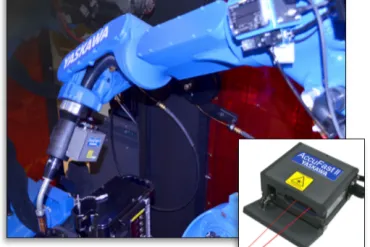
Motoman provides users with add-on features to help enhance the seam finding for their automated welding line. AccuFast II offers improved sensor capabilities that provide even higher amounts of reliability. It provides more readings for a wider range of materials and angles not formerly feasible.
- Robotics Applications
- Featured
Flexible Manufacturing Lines
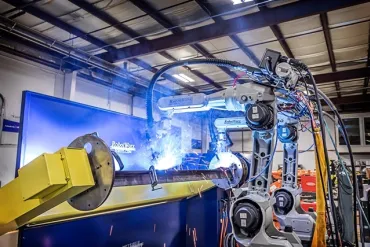
Each year the automation industry continues to innovate and bring solutions that will improve the productivity, flexibility, and efficiency on a wide range of production lines. This is seen with the flexible manufacturing that enables a robot to work on different types of products in the same workcell. Flexible manufacturing lines help to provide an increase in productivity and manufacturing volume.