
Working to keep humans out of harm's way
Industrial robots work hard to make sure that humans are not exposed to dangerous chemicals or any situation that could put them in harms way. For instance, material handling robots are able to reduce the risk of toxic chemical exposure.

For years, material handling robots have been raising the safety level in several different fields by either detecting hazards or handling hazards.
Material handling robotics work to keep humans safe, which follows in line with Isaac Asimov’s first law of robotics: “A robot may not injure a human being or, through inaction, allow a human being to come to harm.”
These robots are working to make sure that humans are not put in dangerous environments or exposed to toxic chemicals.
In the field, there are robots that move and detect dangers to humans in coal mines, as well as robots that work for our military, “sniffing” out IEDs and mines. These robots work to keep humans out of harm’s way.
The same can be said for material handling robots in factories. Hazardous material handling robots work with old munitions, chemicals, and other material that may be dangerous to human workers.
Some of these dangers may not be as bad as you think. When material handling robotic systems are palletizing grain, for instance, each drop releases a cloud of dust that could be harmful to the lungs of human workers.
A similar case could be made for material handling dispensing robots that deal with paint and other coating materials. These materials when sprayed can cause toxic fumes that can lead to hospitalization if exposed for too long a period of time.
Robots.com has several material handling robotic models from Fanuc, Motoman, ABB, Universal, and KUKA suited for hazardous material handling applications. Our designers will work with your company to find the perfect robot for your needs.
For more information about Robots.com, contact 877-762-6881 or request a quote online.
Related Articles
You might be also interested in:
- Safety & Regulations
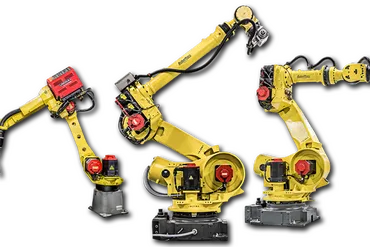
Top Reasons to Automate Your Foundry with Robotics
Foundry robots excel in harsh environments bringing their power, safety, increased savings, accuracy, and flexibility. Foundry robots have an IP 67 rating and can endure harsh conditions with ease and work without fatigue. They can also handle heavy payloads and reduce the injuries of human workers by taking care of the repetitive and back breaking labor.
- Safety & Regulations
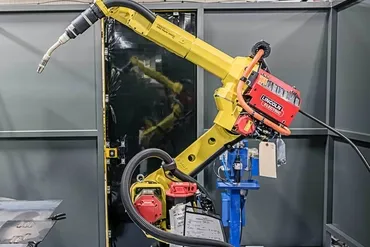
Building an Effective Welding Cell: A How-To Guide
It is important to plan a welding workcell out to optimize your production line. You must consider a positioner, safety package, and other key elements in order to complete the perfect welding cell.
- Safety & Regulations
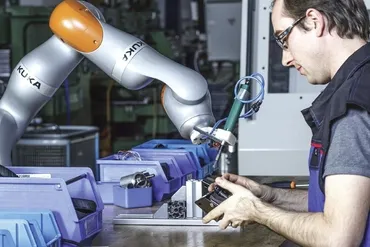
Collaborative Robot Safety
Collaborative robots are becoming more enticing to manufacturers as they the perfect bridge for manual work and automation. These collaborative robots provide increased productivity and added value while also being incredibly safe. There are a variety of factors that help provide a safe environment for the workers who interact with them such as vision and sensors.
- Safety & Regulations
International Robot Safety Conference
The International Robot Safety Conference (IRSC) dives deeper into robotic safety and industrial machine and robot standards. Robots.com sends a few employees to attend the conference and stay up to date on all of the trending safety issues. The IRSC helps people from all different applications and backgrounds to stay safe and competitive in the automation world.
- Safety & Regulations
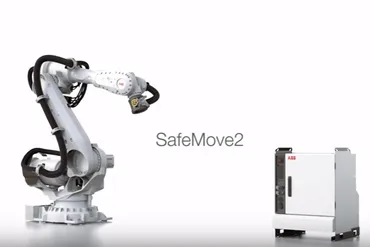
Innovative Safety Solutions with ABB's SafeMove2
ABB has provided customers with an updated software solution titled SafeMove2. SafeMove2 will increase the flexibility, greater space savings, numerous cutting edge commissioning tools, and improved safety functions. The safety function of SafeMove2 include safe speed limits, standstill monitoring, axis ranges and position, and orientation supervision. This helps to decrease the overall need for fences and cages.

- Safety & Regulations
Tool Changers Provide Strength, Safety, and Effectiveness
If your industrial line requires a tool change during your manufacturing process, than you may want to consider a robotic tool changer. A robot tool changer provides flexibility for automation processes to automatically change tools, end-effectors, or other secondary tooling quickly and effectively. ATI Industrial Automation is an industrial leader in robotic end-effectors and robot arm tooling. They have created a Robotic Tool Changer that is a coupling device that locks and unlocks pneumatically.
Let's talk!
Request your quick quote today.