
Identifying Issues with Your Robot's E-Stop: When Repair is Needed
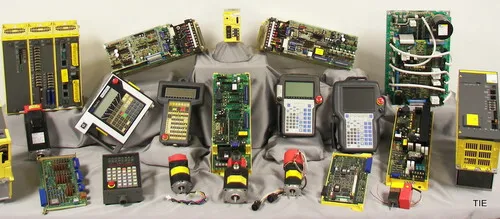
How to Keep Your Safety Systems Secure and Production Running Smoothly
Nothing is more critical than safety in a modern factory where industrial robots like the FANUC M-900iB, KUKA KR C4, or Motoman GP25 perform precise, high-speed tasks. At the core of every robotic safety protocol is one minor, often overlooked component: the Emergency Stop (E-stop). This button is designed to instantly bring all motion to a halt, protecting workers and equipment alike. But what happens when it doesn't work as expected?
From automated welding in automotive manufacturing to pick-and-place operations in consumer goods, a faulty E-stop can turn a secure robotic cell into a serious hazard. Identifying issues early and knowing when repair is essential could be the difference between continued uptime and catastrophic failure—or worse, injury.
Robots.com is your trusted source for refurbished robots and replacement parts. We’ll walk you through how to spot E-stop issues, understand their root causes, and know when it's time to repair or replace.
The Role of the E-Stop: Your Robot's First Line of Defense
The Emergency Stop (E-stop) is a fail-safe control function that allows a robot operator to halt all robot motion in a hazardous situation immediately. Unlike regular stop commands, E-stops:
- Cut power to actuators
- Bypass software instructions
- Are hardwired into the safety circuit
- Cannot be overridden by standard logic
This system is required by safety regulations and is standard on all industrial robots—including models such as the FANUC LR Mate 200iD and the ABB IRB 2600.
Key Signs Your E-Stop May Be Malfunctioning
A compromised E-stop system isn't always obvious. Here are warning signs to watch for:
1. Failure to Stop Motion on Activation
When pressed, the E-stop should completely halt the robot’s movement within milliseconds. If the robot continues motion—especially in high-speed applications like—you may have:
- Faulty relay circuits
- Disconnected or shorted E-stop wiring
- Controller software override (a serious safety violation)
2. Unintended Movement After Activation
After an E-stop is triggered, the robot should remain locked out until it’s properly reset. If it:
- Jumps or jerks
- Moves slowly or unpredictably
- Resumes activity without reset
These are signs of signal interference, control board issues, or mechanical lockout failure.
3. Physical Button Problems
The E-stop button should:
- Press with a firm click
- Require a twist or key to reset
If it’s sticky, soft, non-responsive, or hard to reset, the mechanical switch may be degraded or broken. Environmental factors like dust, oil, or coolant exposure can lead to corrosion or contamination.
4. Random or Intermittent E-stop Faults
In some robots, the control panel may display E-stop circuit faults even when the button isn’t touched. Intermittent or phantom faults usually point to:
- Loose wiring in the control cabinet
- Grounding issues
- PLC/controller malfunctions
How to Diagnose and Troubleshoot E-stop Problems
Before jumping to replacements, a structured troubleshooting process can pinpoint the root cause.
Step 1: Perform a Visual Inspection
- Check E-stop button for wear, corrosion, or debris
- Inspect wiring, connectors, and terminal blocks
- Look for signs of overheating or moisture damage in the panel
Step 2: Test with a Known-Good Component
If you have a compatible spare E-stop button, swap it to see if the issue persists. If the problem goes away, the button is likely at fault.
Step 3: Review Diagnostic Logs
Use your robot’s controller to check for logged errors or E-stop events. Look for recurring fault codes tied to:
- Circuit faults
- Power interruptions
- Safety relay failures
Step 4: Isolate with a Multimeter
A multimeter can test continuity across the E-stop contacts and confirm signal integrity along the circuit path. Any open circuits when the button is pressed indicate a problem.
When Is Repair (or Replacement) Necessary?
If any of the following apply, your robot should be taken offline immediately until the issue is resolved:
- E-stop fails to stop robot motion
- Movement resumes after E-stop without reset
- System logs repeat or erratic E-stop faults
- Button does not engage or reset properly
Never bypass or disable the E-stop—this violates OSHA and ISO safety standards and could result in legal penalties and serious injuries.
Industries and Applications at High Risk from E-Stop Failures
Application | Common Models | Why E-Stop Integrity is Critical |
Automotive welding | FANUC M-710iC, KUKA KR QUANTEC | High-speed, high-temperature processes require instant shutdowns |
CNC Machine Tending | ABB IRB 6700, Motoman GP50 | Close proximity to rotating tools makes safety paramount |
Packaging and Palletizing | FANUC M-410iB, KUKA KR 40 PA | Large moving payloads present crush hazards |
Electronics Assembly | FANUC LR Mate, ABB IRB 120 | Delicate, fast processes in tight cells need reliable safety |
In these sectors, a failed E-stop could cause mechanical damage, lost production, and safety violations in seconds.
Pro Tips to Extend E-stop Reliability
- Schedule monthly tests of all safety systems
- Label and document all E-stop locations and functions
- Keep replacement parts in stock—especially for legacy models
- Train operators to recognize and report unusual behavior
- Use protective enclosures in dusty, wet, or abrasive environments
Safety Starts with You—Let Robots.com Be Your Partner in Uptime
A robot’s speed and precision are only valuable if the system is safe—and that starts with a working E-stop. If you’ve noticed strange behavior, inconsistent stopping, or physical wear on your E-stop, don’t wait for a failure to act.
At Robots.com, a part of T.I.E. Industrial, we offer:
- Replacement E-stop units
- Expert diagnostics and support for FANUC, ABB, KUKA, and Motoman systems
- Repair services for controllers and boards affected by safety faults
Your safety is non-negotiable—and so is your uptime.
Contact us today to browse our extensive inventory, get technical help, or schedule a repair. Let’s keep your operations running safe, smart, and unstoppable.
Let's Get In Touch
Related Articles
You might be also interested in:
- Robotics Applications
- Featured
Latest Advancements in Material Cutting Robotics
Read about the latest technological advancements in robotic material cutting.
- Innovation & Trends
- Featured
Emerging 3D Vision Technologies for Industrial Robots
Learn about the emerging 3D vision technology that businesses are using for industrial robot applications.

- Innovation & Trends
- Featured
Most Popular Industrial Robotic Applications for 2021 and Projections
Explore the most popular application trends of 2021 and what to expect in the future.
- Robotics Applications
- Featured
MAG Welding Defined
Automating your MAG welding process will help to bring faster and more consistent cycle times. A robotic MAG welder will also help to improve the weld quality, helping your customer's become more satisfied with the final product. If you are interested in integrating a new or refurbished robotic system, contact Robots.com experts today.
- Manufacturers
- Featured
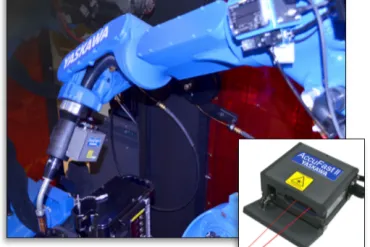
AccuFast II Tackles Seams Quickly and with Quality
Motoman provides users with add-on features to help enhance the seam finding for their automated welding line. AccuFast II offers improved sensor capabilities that provide even higher amounts of reliability. It provides more readings for a wider range of materials and angles not formerly feasible.
- Robotics Applications
- Featured
Flexible Manufacturing Lines
Each year the automation industry continues to innovate and bring solutions that will improve the productivity, flexibility, and efficiency on a wide range of production lines. This is seen with the flexible manufacturing that enables a robot to work on different types of products in the same workcell. Flexible manufacturing lines help to provide an increase in productivity and manufacturing volume.