
Medical Manufacturing Automation
The medical industry is using robots for surgical applications and medical-device manufacturing, and also within pharmaceutical and hospital settings. The manufacturers really like the flexibility that robots offer during continuously changing operations while also tackling the rapid pace of new product development.

Robots have recently been recruited to work on surgical applications, but they are also more commonly used for automating operations in medical-device manufacturing, as well as pharmaceutical and hospital settings. Medical manufacturers need to have the flexibility to adapt to continuous change, and automation systems must help them respond to the rapid pace of new product development.
A modular, automated transport system to assemble and move medical device models is essential. Modular motion control promotes layout flexibility to maximize space and footprints while saving money. Because of the line changes and reconfiguration required to handle medical device products, the modular motion control promotes optimized workflows.
Force-control sensing and vision-guided systems represent advantages for medical automation. Fanuc’s iRVision allows users to check the integrity of the process with verification and traceability. A robot equipped with iRVision can not only grab a part and put it in a box, but present it to a camera and read the bar code as well, which ensures product safety. Force-control sensing enables the robot to “feel” and to assemble with higher processing power.
Laboratory automation is another large part of robotic medical applications, like drug discovery. This requires robots to load components into microtiter plates to come up with a compound to kill bugs. ABB’s IRB 20 6-axis model is well-suited for these operations, as are Cartesian robots with SCARA.
Acme Manufacturing Co. specializes in manufacturing turnkey robotic finishing systems. For these applications, Acme uses Fanuc robots. The systems designed and built by Acme are for centerless grinding, robotic finishing, flat-stock grinding, and custom turnkey solutions. They polish and finish medical implants such as knees, hip stems, cups, balls, and shells, tibia trays, bone plates, and nails. Finishing applications such as these can be very dangerous for a human, so a robot is an ideal solution. Acme developed an Ultra-Light Floating Head for medical part finishing. It uses automatic force control for the finishing heads for optimal compliance. This produces greater repeatability and improved product quality.
ABB Robotics uses many of their medical robots for high-speed pick-and-place applications. Their FlexPicker robots can kit products like blister packs and can also polish hip and knee replacements. The FlexPicker is also useful in large drug manufacturing companies since they are built for speed
Robotic automation also aids pharmaceutical companies with their work on assays. There is an abundance of testing occurring in order to shrink the field. These companies are discovering that robots can deliver better process consistency. Adept Technology Inc. recently signed an agreement to be the exclusive provider of robots to Swisslog Healthcare Solutions for use in hospitals, labs, and clinics. Their robots will transport specimens, lab samples, and pharmaceuticals.
Robots.com can easily help you automate the production or packaging of medical instruments. Contact us today online or at 877-762-6881 for help on which medical robot is best for you.
Related Articles
You might be also interested in:
- Industry Solutions
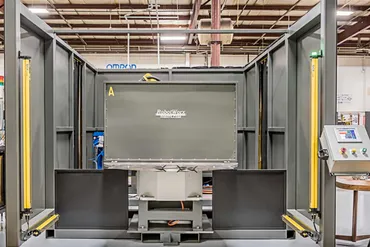
Setting up an efficient shop floor with robots
If you are considering integrating with industrial robots on your production line, it will help to plan your workspace properly for the greatest efficiency. Shop floor efficiency will be increased based on the five elements that are listed. This thoughtful layout will help you stay competitive in the manufacturing world.
- Industry Solutions
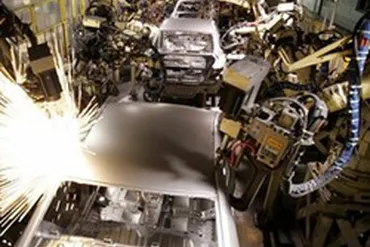
Reinventing Automotive Assembly with Robots
On the automotive assembly line, industrial robots perform faster and cheaper making them a better choice for manufacturers. The automotive assembly robots can be fitted with vision, making them more precise and create a more consistent product.
- Industry Solutions
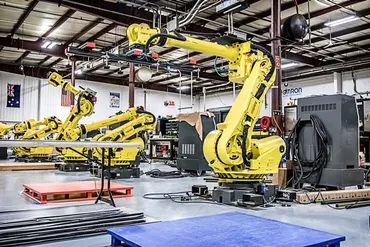
Foundry and Lean Manufacturing in Clyde, Ohio
The state of Ohio has a wide range of manufacturing businesses that have integrated industrial robots to improve their processes. The robotic technology that has been integrated has helped industries of all types such as steel cutting and molding plastics.
- Industry Solutions
Six-axis robots add flexibility to automotive component adhesives
For automotive production lines, six-axis robots are the solution for added flexibility and productivity. When compared with four-axis robots, six-axis robots add high levels of flexibility and enhance the automotive adhesive component. Six axis robots can perform operations that need to meet specific cycle times.
- Industry Solutions
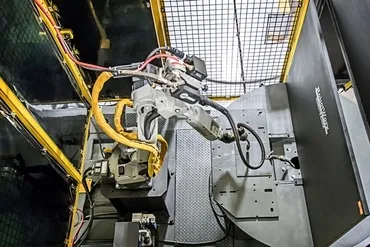
They Can Take The Heat - Foundry Robots
A foundry robot can work in hazardous conditions without being damaged or effected. They help to remove humans form the harmful environment and hazardous materials that are present during this application. Foundry robots are up to the heat challenge and help to successfully complete a wide range of tasks in a more productive and efficient manner.
- Industry Solutions
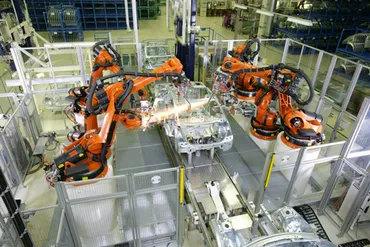
Automotive Machine Loading Robots
Using machine loading industrial robots on the automotive line has increased the production speeds, cut costs, and increased the product quality. Machine loading robots are able to handle a variety of jobs and accomplish the job of a human worker in half the time.
Let's talk!
Request your quick quote today.