
Reinventing Automotive Assembly with Robots
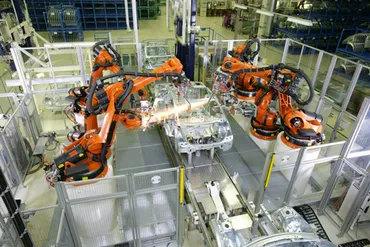
On the automotive assembly line, industrial robots perform faster and cheaper making them a better choice for manufacturers. The automotive assembly robots can be fitted with vision, making them more precise and create a more consistent product.

The Growing Dominance of Assembly Robots in Automotive Manufacturing
One of the most common industries to use assembly robots is the automotive industry. With all the parts, large and small, that go into the production of an automobile, assembly robots seem to be the perfect fit.
Precision and Intelligence: The Core of Robotic Assembly
The assembly of automobiles and other vehicles demands high levels of accuracy and precision. Given the complexity of modern vehicles, which incorporate advanced electronics and safety features, the intelligence and steady precision of robotic assemblers are more than just beneficial – they're becoming essential.
Why Assembly Robots are Transforming Car Manufacturing
Because the assembly of automobiles, as well as other vehicles, is a process that requires accuracy and precision, the intelligence and steady “hand” of robotic assemblers are almost a necessity these days. As vehicles become more complex and include more electronics and safety measures, assembly robots are relied on heavily for running applications for the major and minor components.
Why are assembly robots – along with painting, dispensing, sealing, and welding robots – invading every car manufacturer worldwide? The answer is simple: Assembly robots perform faster and cheaper than previous manual assembly applications, making them a more attractive, and possibly all-around better, choice for manufacturers.
The Added Advantage of Vision Technology
Now that these assembly robotic systems can also be outfitted with vision technology, allowing the robot to see, the choice of manual or robotic assembly is almost a given. These robotic assemblers will not only assemble an automobile, but they can also inspect their own work, cutting down on worker error.
Case Study: Ford's Precision Robotic Assembly
It is said that Ford, one company that has moved to robotic assembly, put their 2013 Ford Escape together in a more precise fashion because of their group of vision assembly robots. This robotic assembly reduced gaps between vehicle parts, which decreased wind noise throughout the vehicle. One Ford engineer claimed that robotic assembly gave the vehicles a “custom-like build” because of the assembly precision.
Robots.com: Your Partner in Automotive Assembly Automation
Thinking about introducing robotic assembly automation into your plant, or possibly upgrading your existing system? Robots.com is here to help!
Customized Robotic Solutions from Industry Leaders
Robots.com provides solutions from many robotic companies, including Fanuc, KUKA, Universal Robots, ABB and Motoman. With a company like Robots.com, you will get a customized new or refurbished system that is built to your application’s exact specifications.
For more information about automating your assembly process with Robots.com, contact us today at 877-762-6881.
Related Articles
You might be also interested in:
- Industry Solutions
Setting up an efficient shop floor with robots
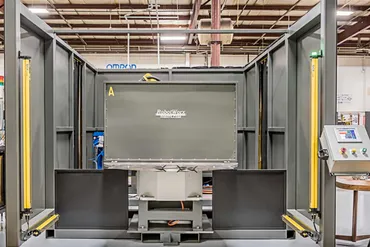
If you are considering integrating with industrial robots on your production line, it will help to plan your workspace properly for the greatest efficiency. Shop floor efficiency will be increased based on the five elements that are listed. This thoughtful layout will help you stay competitive in the manufacturing world.
- Industry Solutions
Foundry and Lean Manufacturing in Clyde, Ohio
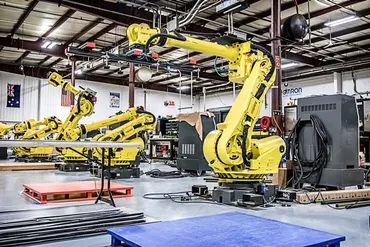
The state of Ohio has a wide range of manufacturing businesses that have integrated industrial robots to improve their processes. The robotic technology that has been integrated has helped industries of all types such as steel cutting and molding plastics.
- Industry Solutions
Six-axis robots add flexibility to automotive component adhesives
For automotive production lines, six-axis robots are the solution for added flexibility and productivity. When compared with four-axis robots, six-axis robots add high levels of flexibility and enhance the automotive adhesive component. Six axis robots can perform operations that need to meet specific cycle times.
- Industry Solutions
They Can Take The Heat - Foundry Robots
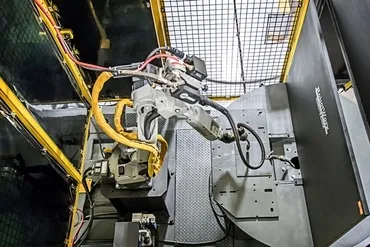
A foundry robot can work in hazardous conditions without being damaged or effected. They help to remove humans form the harmful environment and hazardous materials that are present during this application. Foundry robots are up to the heat challenge and help to successfully complete a wide range of tasks in a more productive and efficient manner.
- Industry Solutions
Automotive Machine Loading Robots
Using machine loading industrial robots on the automotive line has increased the production speeds, cut costs, and increased the product quality. Machine loading robots are able to handle a variety of jobs and accomplish the job of a human worker in half the time.
- Industry Solutions
Revolutionizing Welding: Reviewing Fanuc Cobots vs. Traditional Industrial Robot Welders
In recent years, the welding industry has experienced a remarkable transformation, all thanks to the introduction of collaborative robots, or cobots. These highly versatile and user-friendly robots have emerged as a game-changer, offering an alternative to traditional industrial robot welders. In this blog post, we embark on a journey to explore the world of cobots in welding, comparing them to their traditional counterparts, uncovering their industry advantages, and revealing how they boost production while maintaining impeccable quality standards.
Let's talk!
Request your quick quote today.