
Robots are Working Behind the Scenes in Hollywood
Robots are helping movie producers in the movie making process. There are robots helping with behind-the-scenes jobs such as holding the camera. This was one of the duties seen during the making of the movie Gravity.

When you think of robots and movies, you probably think of Johnny 5, Wall-E, or the Terminator. Or, you may think of the more realistic robots in movies, like the industrial robot that continually sprayed Tony Stark with a fire extinguisher in
When you think of robots and movies, you probably think of Johnny 5, Wall-E, or the Terminator. Or, you may think of the more realistic robots in movies, like the industrial robot that continually sprayed Tony Stark with a fire extinguisher in Iron Man. However, industrial robots are not just working in movies in Hollywood, they are also helping to make movies.
Robots have started to pair with directors in Hollywood to assist in the movie making process. Think about those scenes where shots have to be steady and move around a scene. What better than a robot to hold the camera? That was one of the many duties that robots helped to make the movie Gravity in 2013.
According to Popular Mechanics, the movie Gravity relied heavily on industrial robots that were originally designed to perform assembly, welding, and painting application. Instead of being fitted with welding guns and other industrial tooling, the end-of-arm tooling items for these robots were cameras, lights, props, and even the actors. This was especially important when having to shoot film of the actors rolling through space uncontrollably. With the help of the robot arms, the crew was able to pull off remarkable shots that made the tumbling into the vastness of space look all too real. By using robots behind the scenes, the director was able to set a new standard of moving making in Hollywood.
The same robots that were used in movies like Gravity can also be used to improve your production line. Industrial robots can perform a variety of applications, like those mentioned above, as well as pick and place, packaging, dispensing, and material removal applications. If you would like to learn more about robots and how they can fulfill your automation needs, call Robots.com today online or at 877-762-6881.
Related Articles
You might be also interested in:
- General Robotics Information
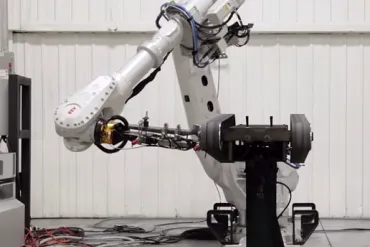
Rotating Workpieces with a Robotic Lathe
A robotic lathe can increase a companies productivity and money. Users of robotic lathes will experience an increase of 55% in productivity.
- General Robotics Information
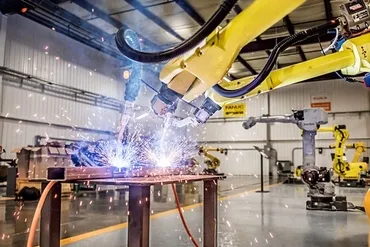
How to avoid weld smut
Weld smut can decrease the quality of a weld. That is why it is important to avoid weld smut. There are a variety of ways to keep weld smut at bay on your production line.
- General Robotics Information
Table Top Robots Solve Floor Space Issues
To help save work space, you may want to consider a table top robot. Table top robots can perform a variety of application all the while providing a reduced footprint and weight.
- General Robotics Information
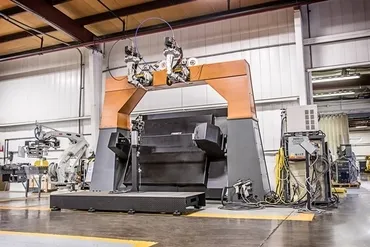
Gantry Robot Applications & Benefits
A gantry robot is hung overhead on a linear track that can move back and forth. Gantry robots are typically used for material handling applications but can also be integrated into welding production lines. Gantry robots are advantageous as they are closer to the part they are working on while also being able to work at different angles than a floor mount.
- General Robotics Information
How to Weld Stainless Steel
If your production line needs to weld stainless steel with industrial robots, there are a few methods to do so. Stainless steel is within a class of iron-base materials that have a certain resistance to rusting and corrosion to do the presence of chromium. Chromium helps produce a tough, impervious layer to help shield it from rust and corrosion.
- General Robotics Information
What Are Autonomous Industrial Robots? Guide to AMRs
Unlike traditional robots that require direct programming or constant oversight, autonomous robots are capable of making real-time decisions, navigating dynamic environments, and adapting to changing conditions. They can operate continuously without breaks, increasing productivity and efficiency in manufacturing and warehouse settings.
Let's talk!
Request your quick quote today.