
Speed vs Flexibility: 4-axis vs 6-axis robots
Industrial robots provide a wide range of benefits on your production line. However, it is important to understand your needs and select the perfect one. If you are looking for increased speeds, especially on your assembly line, then a 4-axis robot is the way to go. The six-axis robots have the edge when it comes to dexterity and flexibility.
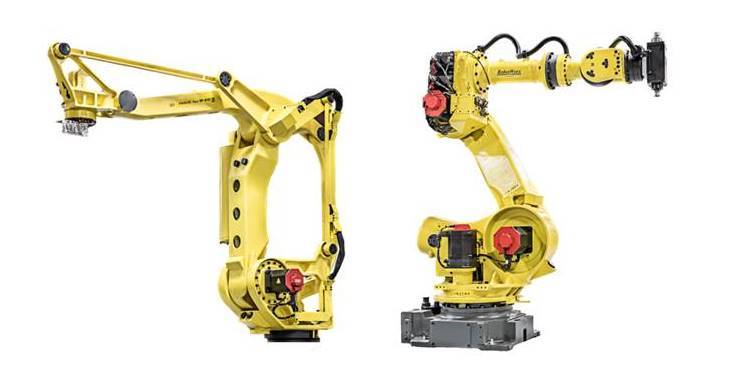
There are several models in industrial robotics. Some are faster, while others are more flexible and able to operate many different applications. When choosing, customers have to consider the four-axis vs. the six-axis robot, or speed vs. flexibility.
What is a four-axis robot?
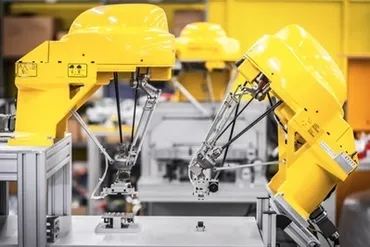
If assembly is your game, and you want fast, the SCARA four-axis robot may be the way to go. In the fight of 4-axis versus 6-axis robots, the four-axis SCARA is the faster model. They are very common in assembly, pick and place, and packaging applications. This four-axis robot is easy to use and can be bolted to a table, programmed, and then ready to work.
What are six-axis robots?
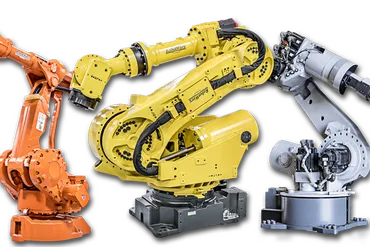
Six-axis, articulated robots, as opposed to four-axis robots, have the edge when it comes to dexterity and flexibility. They allow for greater flexibility and can perform a wide variety of applications, such as material handling, picking, stacking, assembly, and packaging. Four-axis robots cannot manipulate a part with the same freedom that a six-axis robot does. Plus, SCARA four-axis models are usually smaller and have a limited range, unlike the six-axis robots that can be large or small.
Along with their dexterity, six-axis robots edge out the competition in the four-axis versus six-axis by being easier to program. The robot is more flexible and can handle the constant changes in product design and process.
What type of robot is the best?
In the great 4-axis vs. 6-axis robotics debate, it has always been known that 4-axis robots have an edge as far as higher speed and precision, as well as a lower cost for the unit. However, 6-axis robots are making a comeback in the price area as technology advances and costs for units decrease.
Overall, there is not a clear winner in four-axis vs. six-axis robotic systems. It is a matter of speed vs. flexibility, and ultimately, it is up to the customer to see what their facility and application needs more.
Find the right robot with Robots.com
Robots.com, a certified integrator of four-axis and six-axis robots, has several models available, whether you are looking for speed and accuracy or flexibility and dexterity. We are confident that we will have the perfect robot for your facility.
For more information, contact Robots.com today online or by calling 877-762-6881.
Related Articles
You might be also interested in:
- Case Studies
Automation with Alex Products, Inc. – Ridgeville Corners, Ohio
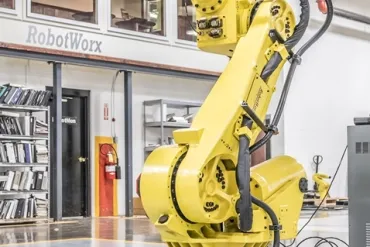
Alex Products, Inc. (API) is a tooling and automation company that looked to Robots.com to help with its robotic integration. Robots.com helped API integrate a Fanuc R-2000iA/210F robot with a RJ3iB controller. API has said that this robot purchase through Robots.com has helped them reduce overall labor costs and increase the productivity on the production line.
- Case Studies
Welding and Assembly at World Block – Duluth, Minnesota
World Block, Inc. worked with Robots.com to integrate a robot on their production line for help with their steel forms and retaining walls. They purchased their first system from Robots.com in 2008 and saw huge labor savings and improved product quality. Because of their great success with the first system, they purchased their second system through Robots.com as well. Overall, World Block, Inc. is able to produce a better quality product at a more affordable price for their customers.
- Case Studies
Thermal Spraying with F.W. Gartner – Houston, TX
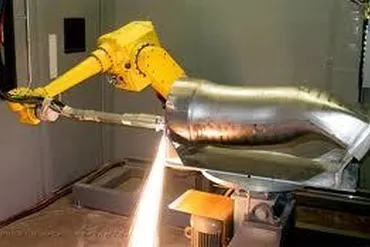
F.W. Gartner in Houston, Texas has been providing coating solutions for customers for over 90 years. Recently, Robots.com providing a new thermal spray solution for their facility. F.W. Gartner could not have been happier with their Motoman MH50-20 DX100 robot from Robots.com. They have stated that this system has boosted their productivity and offers greater flexibility.
- Case Studies
Buying a Robot from Robots.com
Robots.com representatives take pride in their customer service, they will take the time to listen to your production needs and then decide on the best robotic application. It is important for you to know your production expectations, budget, and expected floor blueprint before deciding on a system. Robots.com engineers will do the research to find all of the right options for your needs, including the robot, controller, teach pendant, etc.
- Case Studies
Exploring the Flexibility of Robots
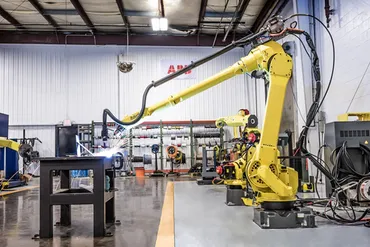
Industrial robots have been increasing the productivity on manufacturing lines for more than four decades. As technology continues to advance, these systems are becoming more affordable and easier to integrate on production lines of all sizes. A robot's flexibility helps to increase the versatility of one's production line, allowing for a greater reach, rotation, and mounting options.
- Case Studies
Boosting Productivity with Robots
Industrial robots can boost the productivity on a wide range of production lines. They can help alleviate the dull, tedious, and dangerous tasks that human workers used to accomplish, increasing the morale at the workplace. Furthermore, robots are very productive bringing fast speeds and greater accuracy on production lines as well.
Let's talk!
Request your quick quote today.