
Types of Robotic Coatings
Coating and painting robots will help to increase the quality of work on your production line. There are a variety of types of robotic coatings available such as thermal spray coatings and field joint coatings.

Coating and Painting robots are built differently from standard robots. They are equipped with explosion proof arms. This is necessary for them to be able to safely spray coatings that create combustible gasses. Coatings are usually solvent-based paints that might trigger a fire. Coating robots must work safely in a volatile environment, and can control all aspects of the spray parameters, such as fan air, atomization air, fluid flow, and voltage.
Thermal spray coating occurs when a substrate is coated to improve functionality. Thermal spray coatings protect parts from high temperatures, abrasion, and corrosion. The types of thermal spray coating differ in their application of thermal and kinetic energy to the source material. Plasma, wire arc, and flame spray are examples of thermal spray coating technology.
Field joint coatings, coatings on the interior of a pipeline, reduce flow friction and internal corrosion, and increase environmental protection. Robots are capable of applying either liquid or powder coatings in either a single application or a multi-pass system. The multi-pass system requires longer initially, but could ensure high temperature resistance later. The type of coating robot used for this type of process depends on the project requirements: a fusion bond epoxy or a plural component liquid epoxy.
Spindle coating systems enhance transfer efficiency. Only sections are targeted to be coated, so paint consumption is reduced and setup time is shortened.
Sealing and coating operations are also common. Car body assemblies require sealing for interior seams, under-body coating, and sound dampers. Powder coating can be used for applications like coating RV parts.
Some examples of coating robots are: Fanuc Paint Mate 200iA/5L, Fanuc P-50iA, Motoman P8, and a KUKA KR 360 KR 360. Robots.com offers all of these robots and many more at a reduced price to fill your coating needs. Contact us today for help deciding which coating robot is right for your factory; online or at 877-762-6881.
Related Articles
You might be also interested in:
- Safety & Regulations
Top Reasons to Automate Your Foundry with Robotics
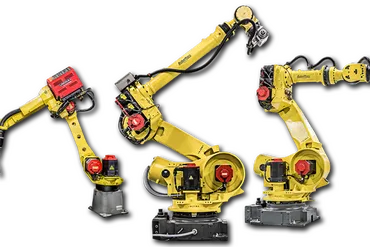
Foundry robots excel in harsh environments bringing their power, safety, increased savings, accuracy, and flexibility. Foundry robots have an IP 67 rating and can endure harsh conditions with ease and work without fatigue. They can also handle heavy payloads and reduce the injuries of human workers by taking care of the repetitive and back breaking labor.
- Safety & Regulations
Building an Effective Welding Cell: A How-To Guide
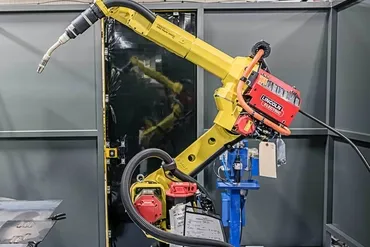
It is important to plan a welding workcell out to optimize your production line. You must consider a positioner, safety package, and other key elements in order to complete the perfect welding cell.
- Safety & Regulations
Collaborative Robot Safety
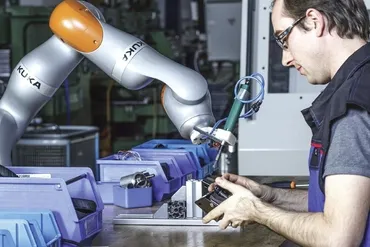
Collaborative robots are becoming more enticing to manufacturers as they the perfect bridge for manual work and automation. These collaborative robots provide increased productivity and added value while also being incredibly safe. There are a variety of factors that help provide a safe environment for the workers who interact with them such as vision and sensors.
- Safety & Regulations
International Robot Safety Conference
The International Robot Safety Conference (IRSC) dives deeper into robotic safety and industrial machine and robot standards. Robots.com sends a few employees to attend the conference and stay up to date on all of the trending safety issues. The IRSC helps people from all different applications and backgrounds to stay safe and competitive in the automation world.
- Safety & Regulations
Innovative Safety Solutions with ABB's SafeMove2
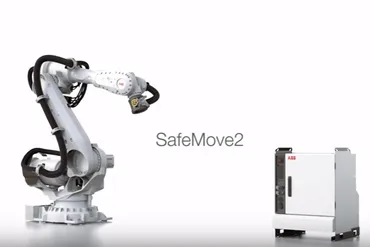
ABB has provided customers with an updated software solution titled SafeMove2. SafeMove2 will increase the flexibility, greater space savings, numerous cutting edge commissioning tools, and improved safety functions. The safety function of SafeMove2 include safe speed limits, standstill monitoring, axis ranges and position, and orientation supervision. This helps to decrease the overall need for fences and cages.

- Safety & Regulations
Tool Changers Provide Strength, Safety, and Effectiveness
If your industrial line requires a tool change during your manufacturing process, than you may want to consider a robotic tool changer. A robot tool changer provides flexibility for automation processes to automatically change tools, end-effectors, or other secondary tooling quickly and effectively. ATI Industrial Automation is an industrial leader in robotic end-effectors and robot arm tooling. They have created a Robotic Tool Changer that is a coupling device that locks and unlocks pneumatically.
Let's talk!
Request your quick quote today.