
Visual Servo Robots with two hands – dual-armed robots that “see”
Visual servo-ing offers robotic sight to improve a robot's accuracy and performance in the workplace. The robot is programmed to interact with a certain item using a camera and specific sensors. This robot, using the visual servos, can really improve a production line's performance.

There are many dual-armed robots in use in industry today for several purposes, ranging from packing to assembly to pick and place. Some of these robots have vision sensors and are known as visual-servo robots.
Visual-servo-ing has been around since the 1980s. This robotic “sight” gives robots the ability to improve their accuracy and performance in the workplace. The technique is fairly simple. The robot is programmed to interact with a certain item. A camera attached to the robot takes a picture of each item that comes into the robot’s work area. If the item does not match the visual-servo robot’s programmed algorithm, it is rejected.
Visual-servo robotic systems can range from the single-armed, six-axis robots that perform in factories every day. However, it is the visual-servo dual-armed robotic systems that are very interesting. The dual-armed robots, which already somewhat resemble humans, are able to now have the sense of sight to help them in their two-armed tasks, whether each arm is working independently, or they are working together.
By using the visual feedback in the visual-servo robot, the robot can track multiple items and handle different sized and shaped objects. This gives manufacturers the ability to change the items on the line without having to go through and reprogram every robot for each product they run.
While robots many never have real eyes like a human, visual-servo robot systems are getting them pretty close to the real thing. And with the way technology is going, who knows what the future may hold for robotic visual-servo systems.
Robots.com, a certified integrator for Fanuc, Motoman, ABB, Universal Robots, and KUKA robotics, has several robot models available for customization and purchase that can be outfitted with visual-servo systems to help the robot see.
For more information about how these vision systems can help your robotic automation, contact Robots.com today online or at 877-762-6881.
Related Articles
You might be also interested in:
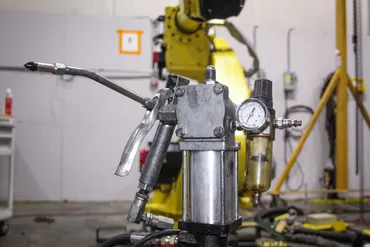
- Technical Components
Understanding Grease Compatibility in Multi-Robot Facilities: Why Standardizing Robot Grease is Critical for Maintenance Professionals
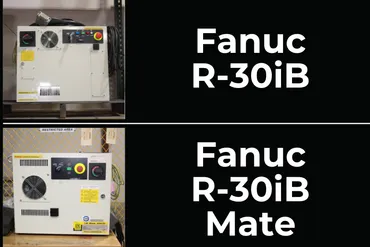
- Technical Components
Fanuc R-30iB vs. R-30iB Mate: Controller Hardware Comparison
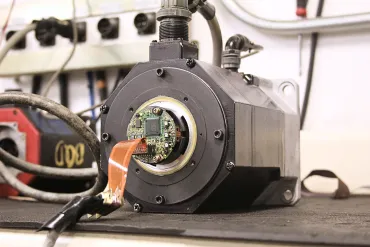
- Technical Components
Advanced Diagnostics: Enhancing Fanuc Servo Motors For Longevity and Performance
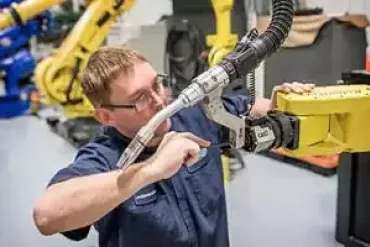
- Technical Components
Fanuc Robotic Arm Maintenance 101: Essential Parts and Procedures
By incorporating robotic arms into manufacturing processes, companies can enjoy numerous benefits that positively affect their operations and their bottom line. Fanuc robotic arms are known for their capabilities regarding precision, elevated quality, and safer working conditions, ultimately leading to increased efficiency and profitability.
- Technical Components
Comparing RJ3iC and R-30iA Robot Controllers
Fanuc continues to innovate by creating new, more advanced controllers, paralleling the advancement of technology. Fanuc's RJ3iC and R-30iA robot controllers are the same controller with different names in order to provide solutions for a wider range of applications.
- Technical Components
The internal parts that move the Fanuc R2000iB/165F
The Fanuc R-2000iB/165F robot can work with a variety of part sizes once the combination of all of its parts work together, including the servomotors, speed reducers, and gears. The R-2000iB/165F robot can handle a wide range of applications such as assembly, palletizing, or packaging.
Let's talk!
Request your quick quote today.