

Industrial Robots for Sale
- Robot Categories
- All Robots
Shop By Brand

Shop By Series
Fanuc Robots
About Fanuc Robots


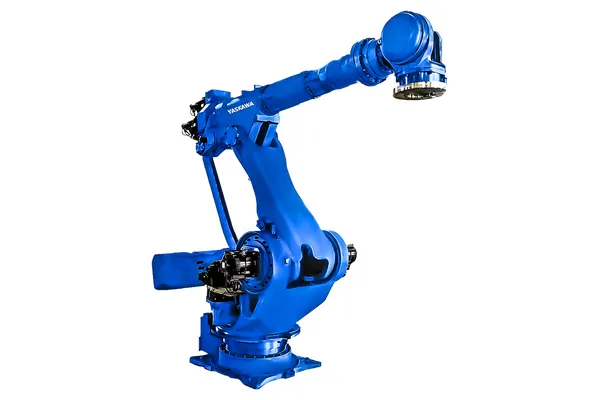
Yaskawa/Motoman Robots
About Yaskawa/Motoman Robots


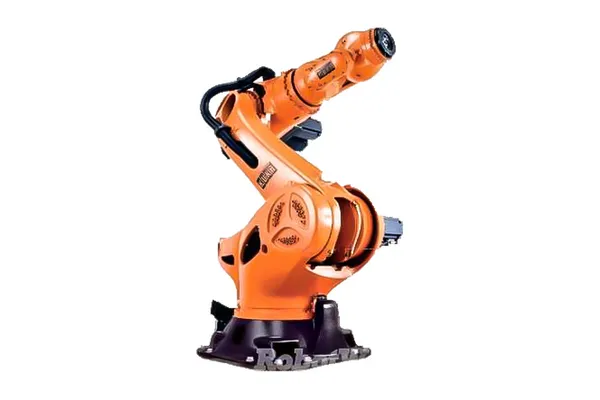
Kuka Robots
About Kuka Robots


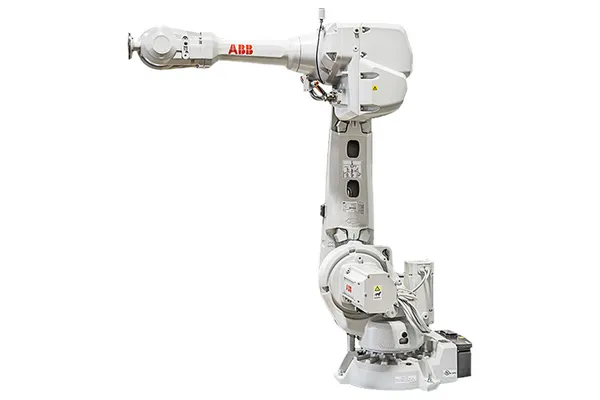
ABB Robots
About ABB Robots


Universal Robots
About Universal Robots


Shop By Applications
New & Refurbished Industrial Robots
Industrial robots have become foundational to modern manufacturing, giving engineers the accuracy, uptime, and control needed to support increasingly complex production demands. Our selection of industrial robots includes brands of models engineered for welding, handling, machining, assembly, and high-speed automation. Each unit is evaluated, tested, and prepared for integration so teams can rely on consistent performance from day one.
By offering industrial robots with a broad range of payloads, reaches, and control capabilities, we help plants streamline planning and improve throughput. Explore industrial robots for sale backed by technical guidance, responsive support, and proven reliability across diverse industrial environments. Our industrial robots align with both new and legacy production systems. Browse our selection below.
Understanding Industrial Robots and Their Capabilities
Industrial robots execute repetitive, high-precision tasks with the consistency required for 24/7 manufacturing. Their programming flexibility allows teams to optimize paths, speeds, I/O interactions, and safety zones to match the complexity of real-world production. As automation expands across industries, industrial robots support higher OEE, reduced scrap, and more predictable output—critical metrics for plants operating with tight tolerances and demanding delivery schedules.
Core Robot Types Used in Production
Articulated six-axis robots for welding, handling, machining, and multi-axis positioning
SCARA robots for rapid assembly and high-speed pick-and-place
Delta and parallel robots for top-speed packaging and small-part manipulation
Heavy-payload manipulators for material handling, casting, and large-component transfer
Collaborative robots for mixed-operator environments with controlled force and speed profiles
Each robot class introduces different motion strategies, reach geometries, and controller capabilities, giving engineers a wide solution set for diverse production challenges.
Key Use Cases for Industrial Robots
Material Handling and Transfer
Reliable path repeatability ensures accurate placement, consistent loading, and smooth machine tending cycles. Robots eliminate bottlenecks caused by manual handling and enhance uptime by maintaining steady, predictable motion profiles.
Welding and Joining
Robots deliver precise torch angles, constant travel speeds, and controlled arc starts, improving weld penetration and bead quality. This supports MIG, TIG, laser welding, and integrated vision guidance for advanced seam tracking.
Surface Treatment and Finishing
Automated grinding, deburring, and polishing benefit from consistent force control and articulated reach. Robots maintain uniform surface quality across multiple part geometries.
Precision Assembly
Industrial robots support screwdriving, micro-positioning, insertion, and adhesive dispensing with repeatability often exceeding manual tolerances.
Selecting the Right Industrial Robot
When comparing industrial robots for sale, engineers typically evaluate:
Payload and moment capacity for tooling, EOAT design, and inertial loads
Reach requirements based on fixture layout and the robot’s working envelope
Speed and acceleration characteristics for cycle-time optimization
Repeatability for tasks requiring consistent joint accuracy
Environmental protections (IP ratings, heat shielding, food-grade variants)
Controller platform and compatibility with PLCs, fieldbus protocols, HMIs, and existing networks
Maintenance strategies, including access to spare parts and ease of service
Matching these criteria upfront reduces integration complexity and leads to more predictable commissioning timelines.
Advantages of Purchasing Refurbished Industrial Robots
Refurbished robots offer measurable performance at a significantly lower capital cost. Each system undergoes a mechanical inspection, encoder validation, evaluation of the bearings and gearset, and full controller testing.
Benefits include:
Lower acquisition cost without compromising function
Faster availability compared to new OEM units
Proven reliability through controlled testing and recalibration
Compatibility with established plant equipment and programming standards
Reduced downtime for expansion or replacement projects
For plants operating legacy cells or seeking incremental automation upgrades, refurbished robots often deliver the best balance of cost and capability.
FAQs About Industrial Robots
Are refurbished industrial robots reliable in demanding environments?
Yes. Before release, robots undergo joint testing, controller-level diagnostics, and cycle simulations to verify performance under load. This ensures accuracy and uptime consistent with production requirements.
How long do industrial robots typically remain in service?
Many robots exceed 20 years with routine preventive maintenance. Refurbished models extend usable lifespan by replacing wear components and recalibrating motion paths.
Can industrial robots be configured for complex or multi-step tasks?
Yes. Modern controllers support multi-axis coordination, vision integration, advanced safety functions, and custom I/O configurations tailored to intricate workflows.
What types of facilities benefit most from industrial robots?
Automotive, metal fabrication, electronics, aerospace, plastics, and food processing operations rely on robotics to stabilize throughput and control quality across high-volume production. Learn more about various applications of robotics systems today.
Let Us Help You Discover the Right Industrial Robots
Explore industrial robots for sale supported by expert testing, engineering insight, and integration-ready preparation. Our team can help you compare models, evaluate specifications, and select the right asset to improve performance across your production systems. Contact us today to learn more.