
Top Robotic Applications in the Food Processing Industry
Read about the most popular robotic applications in food manufacturing and how these processes benefit from automation.
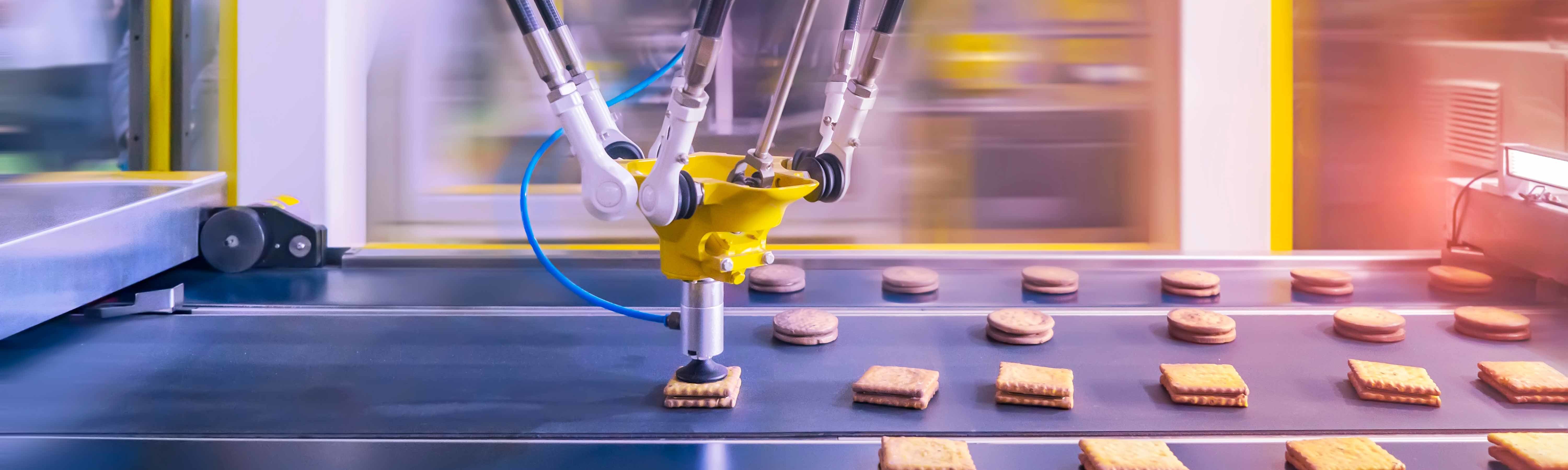
Food manufacturers focus on either primary or secondary food processing. Primary food processing converts raw agricultural goods into consumable food products, like butchering meat. Secondary food processing takes the primary food ingredients and combines them to create new consumables, like hotdogs. Food processing is constantly evolving to be quicker and more efficient to meet increasing demands. Automation has significantly advanced food industry applications by increasing sanitation, increasing production, and improving quality. As a result, food manufacturers turn to automation for butchery, pick and place, and palletizing.
Robotic Butchery— Cutting Applications
Butchering requires precision and knowledge of the animal's anatomy to remove all unwanted parts and create the best cuts from the carcass. Meat and poultry manufacturers utilize automation to increase cut-efficiency and product quality. Automatic meat processing uses automated tools and pre-programmed outlines of the animal carcass to make the appropriate cuts to meat and remove the bones. Learn more about Meat Processing Automation robots.
TIE, the parent company to Robots.com, takes this a step further, using x-rays, vision technology, and automated machine learning to enhance the robot’s cut accuracy, recreating the quality of an experienced butcher. TIE’s robotic assembly line first develops a 3D model of the carcass and identifies where the robotic tool will need to cut. The longer the system runs, the more it will learn and apply when making cuts to the product. An example of TIE’s innovative technology is its case study on automated lamb bone removal. This breakthrough would replace the manual labor of making cuts by hand with an automated machine. Advanced meat automation from companies like Scott eliminates excess waste, ensures safety for assembly workers, increases sanitation, and improves production output. It is clear why so many meat and poultry manufacturers are turning to automation for automatic processing.
Packaging— Pick and Place Applications
To keep a high standard for quality control, food manufacturers need to sort and package batches of products quickly and efficiently. Top robotic brands have developed their series of robots, specifically designed for the food industry, that allow these manual processes to be automated. Pick and place robots can use a combination of vision technology and food-specific tooling to sort through products, putting them in their packaging or on a conveyor belt. The speed and accuracy of pick and place robots are unrivaled, delicately handling products like fish fillets at 100 per minute, without damaging or affecting their quality. Just nine of these robots in an assembly line would package up to 900 fish fillets per minute. At the same time, vision software allows the robots to perform quality control, avoiding undersized or misshapen fillets. The design of these robots is made to handle unpackaged food without contamination and withstand heavy sanitation compliance with food safety standards. The precision and adaptation of pick and place systems are ideal for food manufacturers to keep up with the rapidly increasing demand for food products, making the application so popular within the industry.
Transportation and Shipping—Palletizing
Palletizing is at the end of most manufacturing production lines. The food and beverage industry is no different, needing palletizing to stack and send off goods to be transported. These products are then shipped domestically, internationally, or both. With robotic palletizers, manufacturers can move products at a faster rate without the risk of product damage. With the advancement of robotic grippers, even fragile products can be palletized at the end of the line.
Automation In Food Processing
Food processing sectors see rapid growth in the market, with it being estimated to reach $4.1 trillion by 2026. In response, robotic applications being used in food processing will continue to increase as well. For more information on automated integration, contact the experts at Robots.com online or at 877-762-6881.
Related Articles
You might be also interested in:
- Industry Solutions
Setting up an efficient shop floor with robots
If you are considering integrating with industrial robots on your production line, it will help to plan your workspace properly for the greatest efficiency. Shop floor efficiency will be increased based on the five elements that are listed. This thoughtful layout will help you stay competitive in the manufacturing world.
- Industry Solutions
Reinventing Automotive Assembly with Robots
On the automotive assembly line, industrial robots perform faster and cheaper making them a better choice for manufacturers. The automotive assembly robots can be fitted with vision, making them more precise and create a more consistent product.
- Industry Solutions
Foundry and Lean Manufacturing in Clyde, Ohio
The state of Ohio has a wide range of manufacturing businesses that have integrated industrial robots to improve their processes. The robotic technology that has been integrated has helped industries of all types such as steel cutting and molding plastics.
- Industry Solutions
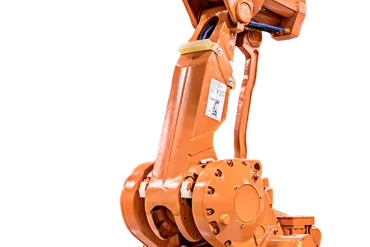
Six-axis robots add flexibility to automotive component adhesives
For automotive production lines, six-axis robots are the solution for added flexibility and productivity. When compared with four-axis robots, six-axis robots add high levels of flexibility and enhance the automotive adhesive component. Six axis robots can perform operations that need to meet specific cycle times.
- Industry Solutions
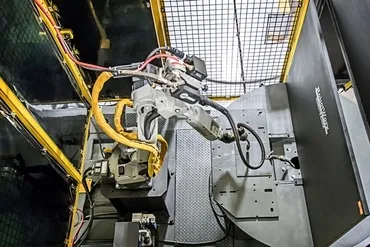
They Can Take The Heat - Foundry Robots
A foundry robot can work in hazardous conditions without being damaged or effected. They help to remove humans form the harmful environment and hazardous materials that are present during this application. Foundry robots are up to the heat challenge and help to successfully complete a wide range of tasks in a more productive and efficient manner.
- Industry Solutions
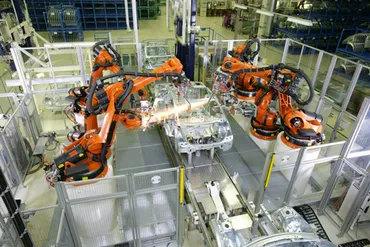
Automotive Machine Loading Robots
Using machine loading industrial robots on the automotive line has increased the production speeds, cut costs, and increased the product quality. Machine loading robots are able to handle a variety of jobs and accomplish the job of a human worker in half the time.
Let's talk!
Request your quick quote today.