
- Safety & Regulations
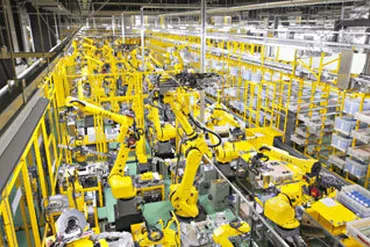
Six-axis spraying robots save on waste and help environment
Spraying robots help to decrease waste and help the environment. They are also versatile and can perform a variety of tasks such as painting, coating, or waterjet applications. They can also help to reduce, reuse, and recycle materials, making the production line more environmentally friendly.
- Safety & Regulations
Cleanroom environments – protection against particle damage
Cleanroom robots are the perfect solution to manufacture a quality product in a cleanroom environment. Cleanroom robots are able to help control the particles or other contaminants that may become released during the application process.
- Safety & Regulations
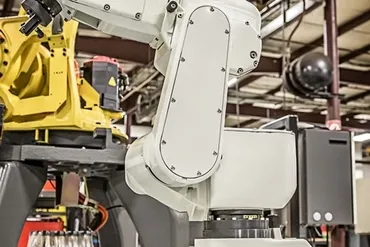
Squeaky cleanroom robots
Cleanroom robots are used in labs and the electronics fields. As the parts get smaller, the cleanroom robots are able to use their gentle gripper and pick up with extreme precision and gentle care. The cleanroom robots also run clean, there are dust-free robotic parts, belts, etc that do not emit a lot of dust. There are a lot of hoops that a robot has to jump through before it can be classified as a clea
- Safety & Regulations
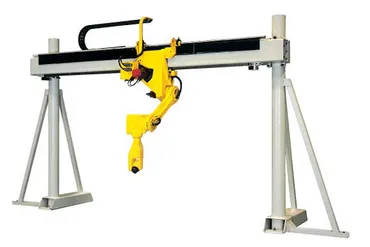
How painting automation reduces hazards
Robotic painting helps to reduce workers from a hazardous work environment. They reduce the exposure to solvents, chemicals, and volatile compounds while also increasing the entire painting process, saving manufacturers time and money. Painting robots also help to produce a very high quality product.
- Safety & Regulations
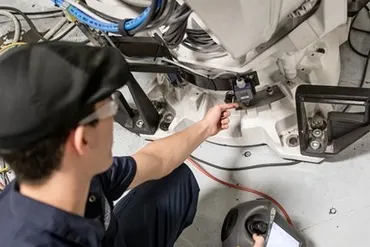
New standard means new robot safety measures and training
The American National Standards Institute approved a new standard for robot safety that states humans are safely able to work in close contact with robots, possibly even without the need for fixturing or positioners. This new standard means new robot safety measures and training will need to take place.
- Safety & Regulations
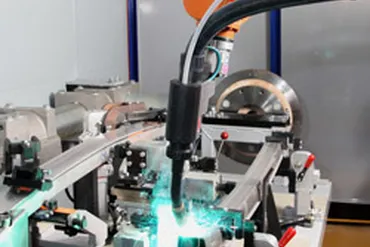
Speed, Accuracy and Safety – the advantages of welding cells
Automated welding cells offer companies many advantages, but there are three big ones that stick out, speed, accuracy, and safety. Robotic welders are faster than manual welders and can produce greater accuracy, resulting in superior welds. Safety also increases when a welding robot is integrated onto the production line as it reduces the exposure to an unsafe work environment.
- Safety & Regulations
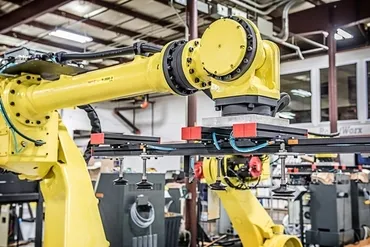
Pick it up and put it down – gripping with suction
Using a vacuum gripper end of arm tooling helps when stacking items on pallets or moving parts to different machines. The vacuum gripper cups are soft and gentle enough to prevent any damage. The robot arm is able to accommodate the pressure based on the needs of the system.
- Safety & Regulations
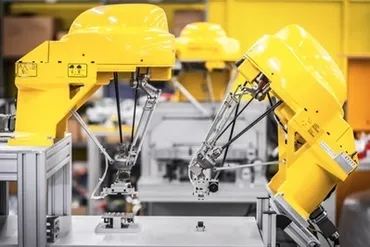
Shock Alert -- Electrostatic Discharge Testing
Electrostatic Discharge (ESD) needs to be understood properly to prevent any harmful effects during the setup and running of your manufacturing process. EDT occurs when a sudden electric current flows between two objects, so it is very important to complete proper testing.
- Safety & Regulations
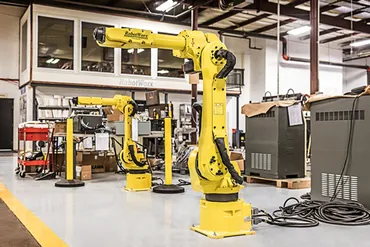
The Industrial Robotic Arm: An Engineering Marvel
The manufacturing world is full of newly automated robots that are helping increase speeds across the globe. One of the most important tools on the production line is the robot arm. The industrial robotic arm can increase throughput while also removing workers from dangerous environments.
- Safety & Regulations
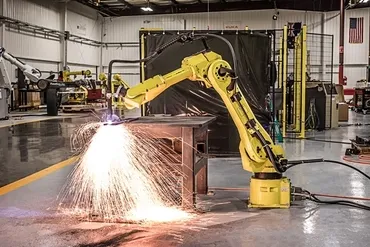
Benefits of Plasma Cutting
Robotic plasma cutting offers higher cutting speeds, easy multitasking, increased safety, and the ability to work with many materials. Industrial robots are very economical solutions to integrate into your current production line.
- Safety & Regulations
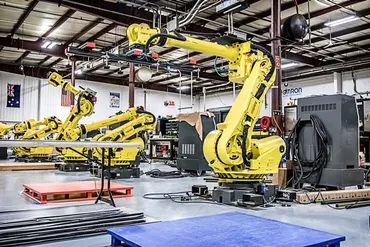
Working to keep humans out of harm's way
Industrial robots work hard to make sure that humans are not exposed to dangerous chemicals or any situation that could put them in harms way. For instance, material handling robots are able to reduce the risk of toxic chemical exposure.
- Safety & Regulations
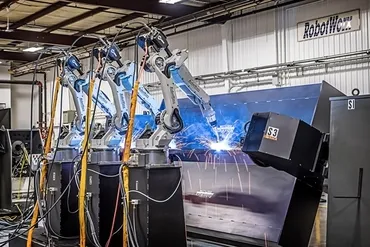
Examples of Robotics
There is such a wide range of robotics available today that it is easy to find the perfect one for any production line. Industrial robots are able to help increase productivity, increase worker safety, and provide a more quality and consistent product.